Birdwatching in the Masai Mara: 570 Species Beyond the Big Five

The Masai Mara is famous worldwide for mammals. Its birdlife is an equally extraordinary spectacle that most visitors barely notice. Over 570 species have been recorded in the Mara ecosystem — more than the entire bird list of the United Kingdom.
The Habitat Diversity That Drives Bird Diversity
The Mara River and its tributaries create corridors of riverine forest that harbour species completely absent from the open plains: Ross’s turaco, Narina trogon, African broadbill, and dozens of forest sunbirds. The Musiara Swamp is one of Kenya’s premier wetland birding sites, hosting saddle-billed storks, black-crowned night herons, African jacanas, and thousands of waders during migration periods.
Raptors: The Mara’s Most Visible Birds
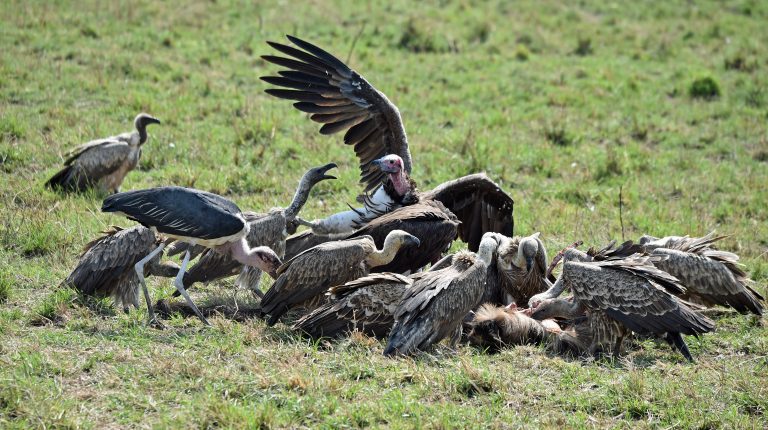
The Mara’s raptors are extraordinary in both number and variety. Martial eagles, bateleurs, African fish eagles, augur buzzards, and multiple species of falcon and harrier are daily sightings. During the migration, thousands of Steppe eagles and lesser spotted eagles pass through on their southward journey. The open terrain makes aerial observation straightforward even from a moving vehicle.
Nikos Pocock, Head Guide & Co-founder, Africa Calling Safaris
Specialist Birding in the Mara
Dedicated birding safaris with specialist guides are available from several camps. These trips use smaller vehicles, move more slowly, and target specific species. For birders visiting during the northern winter, the Mara is a wintering ground for dozens of Palearctic migrants — waders, flycatchers, and warblers that breed in Europe and Asia.
Do I need specialist birding guiding in the Mara?
Not necessarily. General safari guides in the Mara are typically competent birdwatchers. For target species or a comprehensive list, a specialist guide adds significant value.
What is the best time of year for Mara birdwatching?
November to April brings the maximum number of Palearctic migrants. The resident bird community is excellent year-round, with nesting activity peaking in the long rains (April–June).
What binoculars are recommended for safari birdwatching?
8×42 or 10×42 binoculars balance field of view and magnification well. Waterproof models withstand the humidity of riverine habitats.
Can I combine mammal and bird safaris?
Yes — the Mara’s wildlife density means a single game drive delivers both. The trade-off is pace: birding requires more time at each sighting, which means covering less ground.
Visited Africa Calling Safaris? We would love to hear your story.
Share Your ExperienceMore from Safari News
All stories-
Travel Tips
Family Safari Planning: How to Do It Right with Children
A family safari is one of the most transformative holidays a family can take together. It is also one that requires more careful planning than most. Age restrictions, activity options, camp safety,…
-
Travel Tips
Bush Flying in Kenya: How Small Aircraft Connect the Safari Circuit
Bush flying is how most serious safari travellers move between destinations in Kenya and Tanzania. Small aircraft — typically six to twelve seats — connect remote airstrips that are inaccessible by road…
-
Travel Tips
Tsavo National Park: Kenya’s Wilderness Giant
Tsavo is Kenya’s largest protected area, covering approximately 22,000 km² across two contiguous national parks — Tsavo East and Tsavo West. Together they form an ecosystem larger than Wales and support one…