Leopard vs Cheetah: How to Tell Them Apart in the Field
Leopard and cheetah are two of Africa’s most sought-after safari sightings, and they are frequently confused by first-time visitors. Both are spotted cats, both are members of the family Felidae, and both inhabit the East African savannah. But they are morphologically, behaviourally and ecologically distinct animals — and knowing the differences transforms an exciting sighting into a fully understood one.
Physical Differences: What to Look For
The cheetah (Acinonyx jubatus) is built for speed above all else. It is the lightest of Africa’s large cats, weighing 35–65 kg, with a deep chest, narrow waist and long, slender legs. Its head is small relative to its body. The black tear stripes running from inner eye to outer mouth are unique to the cheetah among all cats and serve to reduce glare during daylight hunting. Its spots are solid black circles. The tail has a distinctive black and white banded tip.
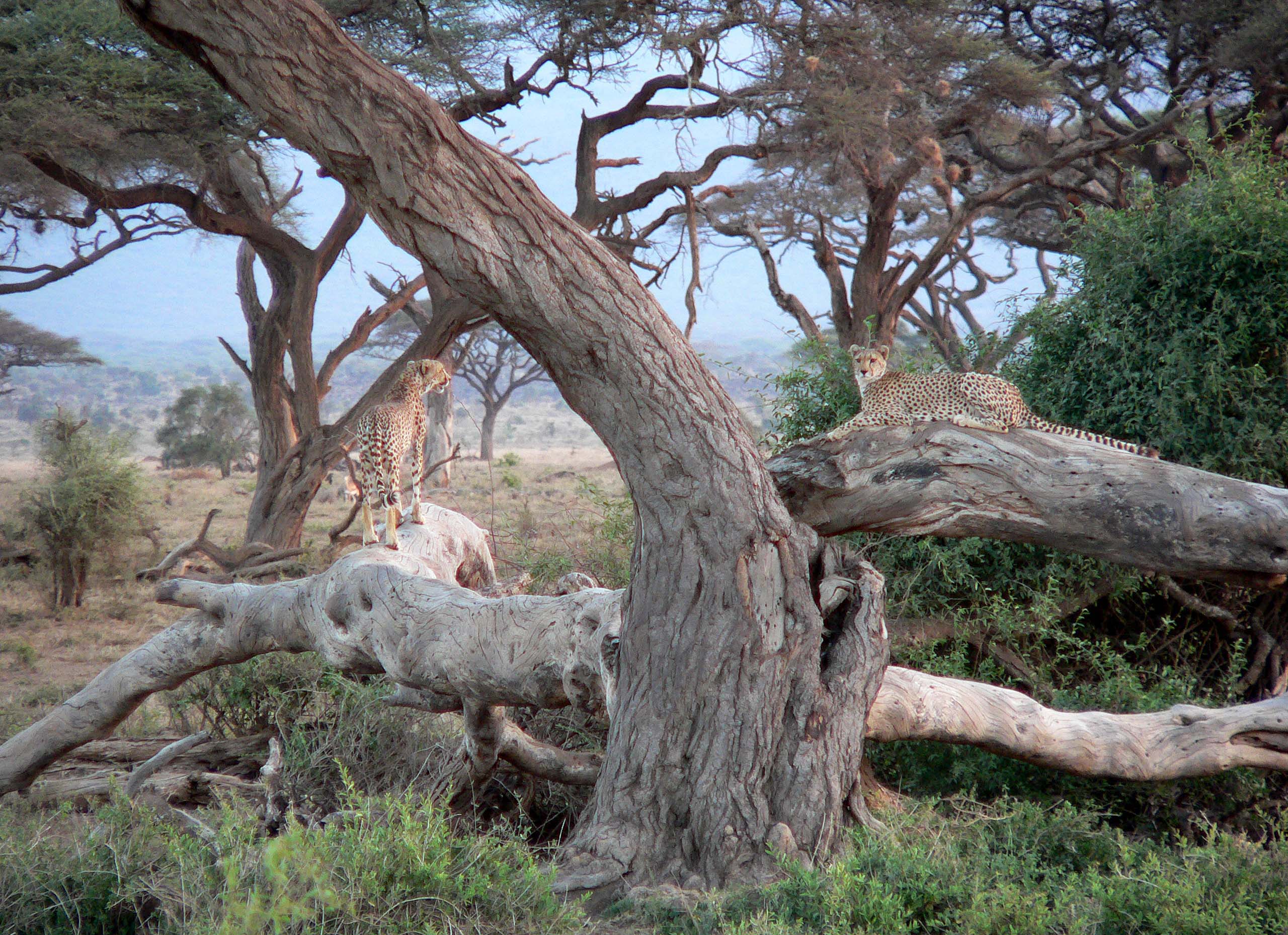
The leopard (Panthera pardus) is a heavier, more powerful animal: 30–90 kg, with a large head, thick neck and muscular shoulders adapted for carrying prey. Its coat pattern consists of rosettes — rings of black spots surrounding a tawny centre — rather than solid spots. There are no tear stripes. The leopard’s body is longer relative to its leg length than the cheetah’s, giving it a lower, more compact profile. It is significantly more variable in colour than the cheetah, from pale ochre to nearly black (melanistic individuals, known as black panthers, occur in some East African populations).
Africa Calling Safaris guide sighting records (2021–2024): Cheetah sightings in the Masai Mara peak between July and October, when the short grass of the migration plains improves visibility. Leopard sightings are distributed more evenly through the year but peak in the dry months when animals concentrate near water and vegetation thins. Average time to first sighting: cheetah 2.3 days, leopard 3.8 days in the Mara ecosystem.
Behaviour: How They Hunt
The cheetah is a diurnal pursuit predator — it hunts primarily in the early morning and late afternoon by stalking to within 50 metres of prey before launching a high-speed sprint that can reach 110–120 km/h. The entire chase lasts no more than 20–30 seconds; the cheetah cannot sustain that speed longer without lethal overheating. It kills by suffocation, holding its prey by the throat. After a kill, it must rest for 15–30 minutes to lower its body temperature before eating, during which time it is highly vulnerable to losing the kill to lions, hyenas or vultures.
“Watching a cheetah hunt is one of the purest athletic events in nature — explosive, precise, and over in under thirty seconds. Watching a leopard hunt is almost the opposite: patience, invisibility, a single explosive moment that is often over before you have fully registered it has begun. They are two completely different experiences of African predation.”
Nikos Pocock — Managing Director, Africa Calling Safaris
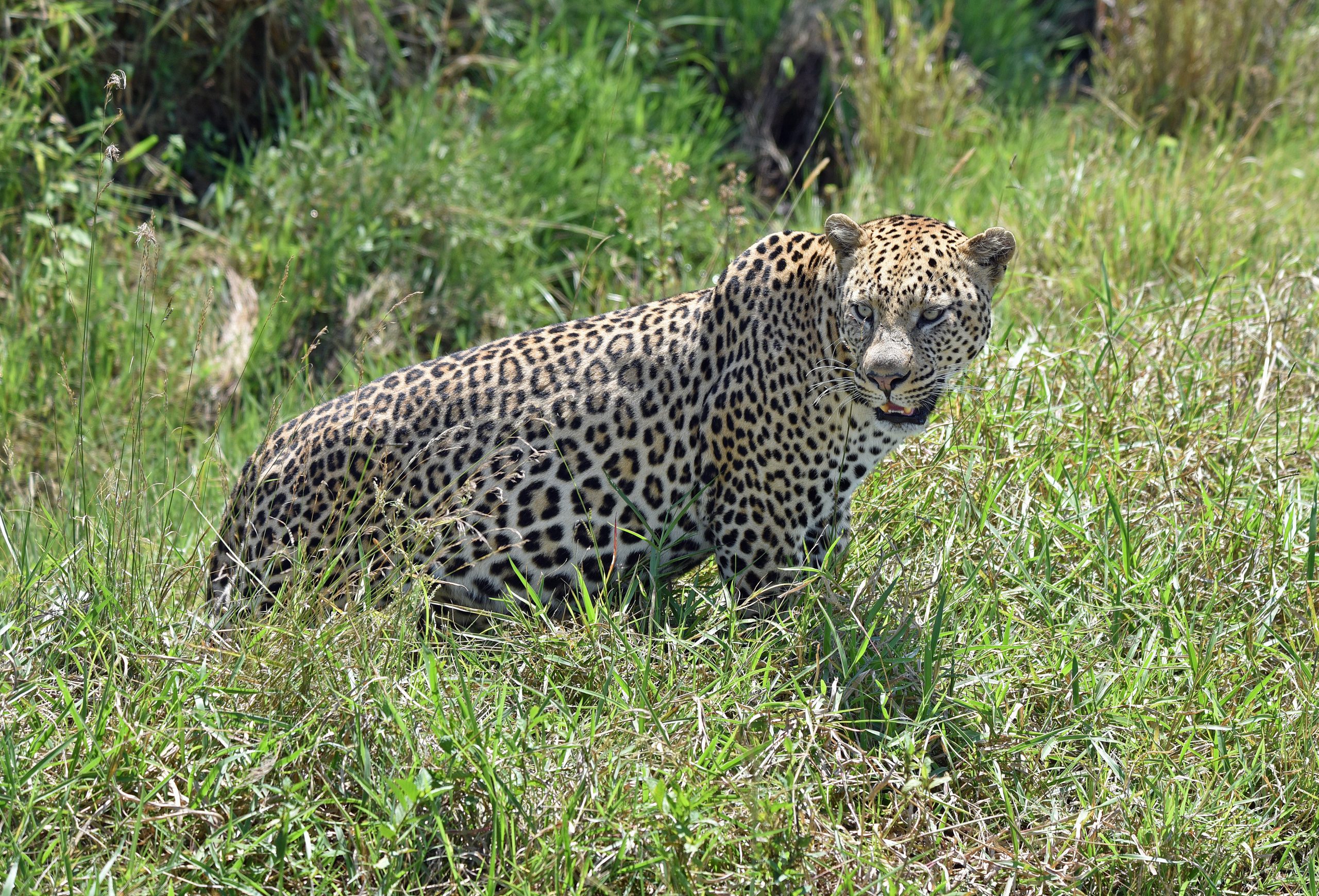
The leopard is a nocturnal ambush predator. It hunts by stealth, using cover to approach prey to within a few metres before attacking. It is an extraordinarily powerful animal relative to its size and regularly hauls prey — including adult male impala weighing 60–65 kg — several metres up into trees to cache it from competitors. Unlike the cheetah, it eats immediately after a kill and can defend its food effectively against most competitors. Leopards are largely solitary and highly territorial.
Distribution and Ecology
In East Africa, cheetahs prefer open grassland and savannah. The Masai Mara–Serengeti ecosystem is the stronghold, particularly during the dry season. The Amboseli basin also holds resident cheetah coalitions. Leopards are far more adaptable and are found across virtually every habitat type in Kenya — savannah, forest edge, riverine bush, mountain moorland. The Masai Mara has a high density population; so do the forests around Lake Nakuru and the Laikipia plateau.
Frequently Asked Questions
Which is more dangerous to humans: leopard or cheetah?
The leopard. Leopards are cryptic, powerful, and known to attack humans on rare occasions, particularly if wounded or cornered. Cheetahs have almost no recorded history of unprovoked attacks on adult humans. This does not mean cheetahs should be approached carelessly, but the relative risk is clear.
Do leopards and cheetahs ever compete for the same prey?
Yes. Both hunt medium-sized antelope — impala in particular — across overlapping range. The two species avoid direct conflict by being active at different times of day. Leopards will steal cheetah kills when the opportunity arises.
Is a melanistic leopard (black panther) a different subspecies?
No. Black panthers are leopards carrying a recessive allele for melanism (excess dark pigmentation). In strong light, the rosette pattern is still visible. They are occasionally seen in the forests and highland areas of Kenya.
What is a cheetah coalition?
Male cheetahs — typically brothers from the same litter — sometimes remain together as permanent hunting coalitions of 2–5 animals. Coalitions hold larger territories and are more successful at defending kills. The Masai Mara has several well-known coalitions that guides can identify by individual markings.
Visited Africa Calling Safaris? We would love to hear your story.
Share Your ExperienceMore from Safari News
All stories-
Travel Tips
Tanzania’s Selous Game Reserve: Africa’s Largest Protected Area
The Selous (now Nyerere National Park) is vast, wild, and radically under-visited compared to the northern circuit. That is the point.
-
Travel Tips
Tipping Culture on an East African Safari: The Complete Guide to Amounts, Timing and Etiquette
Tipping on safari is one of the aspects of East African travel that confuses visitors most. The amounts are significant by local standards, the conventions are not written on any menu, and…
-
Travel Tips
The Role of Dung Beetles in African Ecosystems
Dung beetles are among Africa's most important ecological engineers. Their work shapes the savannah in ways most visitors never see.