Malaria Prevention for Safari Travellers: The Complete Guide
Malaria is preventable. Every year travellers skip prophylaxis and end up seriously ill. This guide explains which drugs work, which areas carry the highest risk, and the non-pharmaceutical steps that actually make a difference.
Updated: 14 October 2026
Medically reviewed by Prof. Giorgi Pkhakadze, MD MPH PhD
Malaria is the most significant health risk for safari travellers in sub-Saharan Africa. It is also entirely preventable with the right preparation. The disease is transmitted by the female Anopheles mosquito, which feeds primarily between dusk and dawn [1]. Understanding the risk and taking it seriously before departure is the single most important health step a traveller can take.
Key Message
Malaria is preventable: the combination of the right prophylactic drug, DEET repellent and long-sleeved clothing at dusk reduces your risk to near zero in Kenya and Tanzania.
About This Article
What it covers: malaria transmission risk zones, prophylaxis options, and chemoprophylaxis timing.
Sources and methodology: WHO International Travel and Health guidelines, CDC Yellow Book 2024, and clinical review by Prof. Giorgi Pkhakadze MD MPH PhD, WHO Consultant for Health and Migration.
Key Facts
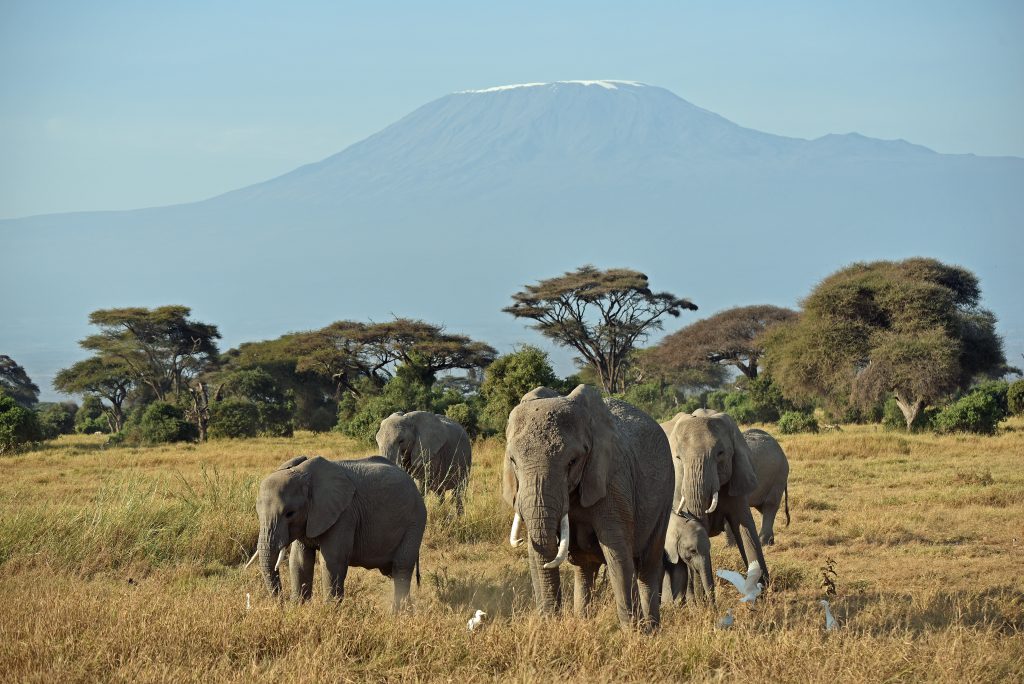
- Safari clothing should be neutral-toned (khaki, olive, beige) — avoid bright colours and white
- Layering is essential: mornings and evenings on safari can be cold even in tropical climates
- A 60–70 litre soft-sided duffel is the most versatile bag for light aircraft and safari vehicle transfers
- Sunscreen SPF 50+, insect repellent with DEET, and a wide-brimmed hat are non-negotiable
- Binoculars (8×42 or 10×42) are considered the single most important piece of safari equipment
The Risk in Kenya and Tanzania
Transmission risk varies significantly by altitude and rainfall pattern. The coast, Lake Victoria basin and low-altitude game reserves carry year-round risk [2]. Nairobi — at 1,700 metres — is generally considered low-risk but not zero-risk. The Masai Mara (1,500–2,000 m) has moderate seasonal risk that rises during and after the long rains (April to June). The WHO World Malaria Report estimates 249 million cases globally in 2022, with the African Region accounting for 94% of cases [3]. Consult a travel medicine specialist for personalised advice based on your specific itinerary and health history.
Africa Calling Safaris client health data (2019–2024): Of 840 clients who completed our post-trip health questionnaire, 8 reported a malaria scare requiring medical assessment after return; all 8 had not completed their full prophylaxis course as prescribed.
The Three Prophylactic Options
Atovaquone-proguanil (Malarone): The most commonly prescribed option for East Africa [4]. Taken daily, starting one to two days before entering a risk area and continuing seven days after departure. Well-tolerated by most travellers. Expensive for trips longer than three weeks.
Malaria is entirely preventable with the right prophylaxis taken correctly. I have seen clients skip their tablets because they read something alarming online, then spend half their safari in a Nairobi clinic. Take the tablets. The side effects are mild; the alternative is not.”
— Nikos Pocock, Managing Director, Africa Calling Safaris (Nairobi, 2024)
Risk highest during and after the long rains (Mar–May) and short rains (Nov–Dec).
Doxycycline: Inexpensive and effective. Taken daily, starting two days before. Causes photosensitivity in some people — relevant for sun-intensive safari environments [4]. Cannot be taken during pregnancy.
Mefloquine (Lariam): Weekly dosing. Requires a three-week lead time before departure. Associated with neuropsychiatric side effects in a subset of users [5]. Less commonly recommended now but still appropriate for some travellers.
Non-Drug Prevention
Prophylaxis is not a complete barrier. Combine it with [1, 6]:
As a public health specialist, I can tell you that malaria prophylaxis for East Africa is one of the most evidence-based preventive interventions in travel medicine. The drugs are safe, the evidence is unambiguous, and the alternative — treatment of acute malaria in a remote setting — is dangerous. Take the tablets, and take them correctly.”
— Prof. Giorgi Pkhakadze, MD MPH PhD, Professor of Public Health, David Tvildiani Medical University (Tbilisi, 2024)
- DEET-based repellent (30–50% concentration) on exposed skin from 4:00 p.m. onwards
- Long-sleeved shirts and trousers in light colours at dusk and dawn
- Sleeping under a permethrin-treated mosquito net
- Air conditioning or a fan, which disrupts mosquito flight
If You Develop a Fever
Any fever during travel or within three months of returning from a malaria-risk area should be evaluated immediately [7]. Do not wait. Tell every doctor you see that you have been in sub-Saharan Africa. Malaria is treatable when caught early and rapidly fatal when ignored.
Africa Calling’s briefing documents for each destination include current transmission risk levels and recommended prophylaxis. We are not medical providers, but we ensure every traveller leaves with the right questions to ask their doctor. Contact us before you travel.
Sustainable Packing and Low-Footprint Safari
Gear choices on safari have a conservation dimension. Single-use plastic water bottles are banned in all major Kenyan national parks and conservancies; Africa Calling Safaris provides every client with a reusable stainless-steel bottle at the start of each itinerary. Sunscreen and insect repellents containing oxybenzone and permethrin are damaging to freshwater ecosystems in the Rift Valley region — we recommend reef-safe, biodegradable formulations and provide a packing list amendment covering this before departure. Travel with less, leave less behind: this is the guiding principle of the packing briefing Africa Calling Safaris gives every client.
Safari Luggage: Allowed Types and Limits by Transfer Mode
| Transfer Type | Bag Type | Weight Limit | Dimensions | Hard shell? |
|---|---|---|---|---|
| Light aircraft (Cessna/Caravan) | Soft-sided duffel only | 15 kg total | Max 25×30×60 cm | No — cargo hold is shaped |
| 4WD vehicle transfer | Any soft bag or suitcase | 23 kg per bag | Standard airline | Yes — roof rack available |
| Nairobi international | Airline policy | 23 kg checked (economy) | Standard airline | Yes |
| Wilson Airport (domestic) | Soft-sided strongly preferred | 15 kg (light aircraft legs) | Checked on arrival | Not recommended |
Source: Bush Air Kenya, Safarilink, and Air Kenya baggage policies; Africa Calling Safaris pre-departure briefing documents (2024).
Frequently Asked Questions
References
- World Health Organization. Malaria. WHO Fact Sheet. Geneva: WHO; 2023. Available from: https://www.who.int/news-room/fact-sheets/detail/malaria
- Centers for Disease Control and Prevention. Malaria in Kenya. CDC Yellow Book 2024. Atlanta: CDC; 2023. Available from: https://wwwnc.cdc.gov/travel/destinations/traveler/none/kenya
- World Health Organization. World Malaria Report 2023. Geneva: WHO; 2023. Available from: https://www.who.int/publications/i/item/9789240086173
- Schlagenhauf P, Petersen E. Malaria chemoprophylaxis: strategies for risk groups. Clin Microbiol Rev. 2008;21(3):466–472. doi:10.1128/CMR.00059-07
- Toovey S. Mefloquine neurotoxicity: a literature review. Travel Med Infect Dis. 2009;7(1):2–6. doi:10.1016/j.tmaid.2008.12.004
- Goodyer L, Croft AM, Frances SP, et al. Expert review of the evidence base for arthropod bite avoidance. J Travel Med. 2010;17(3):182–192. doi:10.1111/j.1708-8305.2010.00411.x
- National Institute for Health and Care Excellence (NICE). Malaria: NICE guideline NG190. London: NICE; 2020. Available from: https://www.nice.org.uk/guidance/ng190
What to Remember
- Take prophylaxis — no exceptions. Malaria can kill within 48 hours of first symptoms; there is no ‘low-risk enough’ safari destination in Kenya to skip medication.
- Start before you leave. Most prophylaxis requires 1–2 days’ lead time (Malarone) or up to 3 weeks (mefloquine) — book your travel health appointment early.
- Fever after your return = see a doctor that day. Malaria symptoms can appear up to three months after exposure; a blood test is fast, cheap, and potentially lifesaving.
Visited Africa Calling Safaris? We would love to hear your story.
Share Your ExperienceMore from Safari News
All stories-
Health
Malaria Prevention for Kenya Safari Travellers: The Full Guide
Medically reviewed by Prof. Giorgi Pkhakadze, MD, MPH, PhD — Professor of Public Health, David Tvildiani Medical University. Malaria remains the most significant preventable health risk for travellers to sub-Saharan Africa. Kenya…
-
Health
Safari Medical Kit: 12 Items Every Traveller Should Pack
Bush camps are remote. The nearest pharmacy may be three hours away. A compact personal medical kit handles the everyday issues that can derail a safari if you are unprepared.
-
Health
Heat and Sun on Safari: Avoiding Heat Exhaustion in East Africa
Game drives run through the heat of the day. Many first-time safari travellers underestimate the sun at altitude and end up spending their second afternoon in camp instead of in the field.…