Wildlife Corridors in Kenya: The Links That Keep Ecosystems Alive
Kenya’s national parks cover roughly 8% of the country’s land area. Wildlife, however, does not read boundary signs. Corridors — stretches of land linking protected areas — are the arteries keeping ecosystems alive.
Why Corridors Matter
A cheetah ranging from Amboseli to Tsavo requires passage through community and private land. An elephant herd following ancient seasonal routes crosses three or four land-tenure boundaries in a single migration. When those passages are blocked by fences, roads, or settlements, animals either die attempting crossings or become confined to areas too small to support healthy populations.
Community Conservancies as Corridors
The most effective corridors in Kenya today are community conservancies — land leased or managed by Maasai, Samburu, and other communities for conservation purposes. Landowners receive a monthly lease payment, reducing incentives to subdivide for agriculture. In return, wildlife moves freely through landscapes that look pristine to any safari visitor.
Nikos Pocock, Head Guide & Co-founder, Africa Calling Safaris
Threats to Corridors
Population growth, infrastructure development, and climate-driven competition for water are the main pressures. The SGR railway required underpasses specifically designed for large mammals — a recognition that linear infrastructure can fragment corridors fatally.
How wide does a corridor need to be?
Effectiveness depends on species. Elephants need corridors of at least 2–5 km width; smaller predators can navigate narrower passages if vegetation is sufficient.
Do corridors help lion populations?
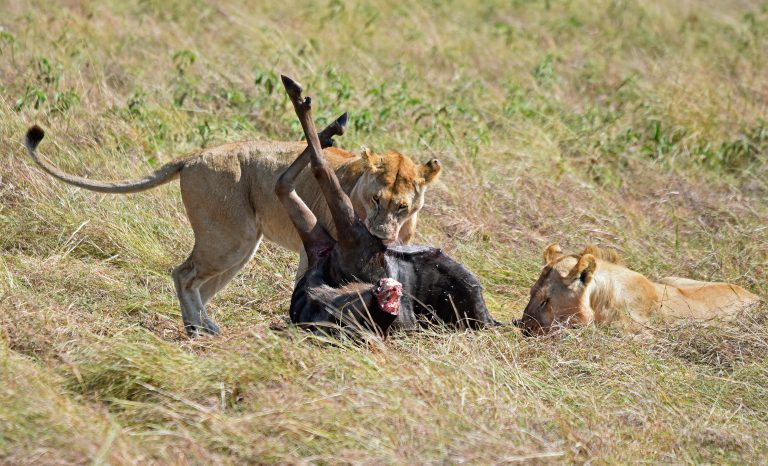
Yes. Lions require large home ranges and suffer genetic bottlenecks in isolated parks. Corridors allow male dispersal, preventing inbreeding and maintaining viable prides.
Can tourists visit corridor areas?
Many corridor conservancies welcome safari tourism — it is often part of the economic model that makes the corridor viable for communities.
What organisations work on corridor restoration?
Save the Elephants, the African Wildlife Foundation, and Wildlife Works are among those active in Kenyan corridor conservation.
Visited Africa Calling Safaris? We would love to hear your story.
Share Your ExperienceMore from Safari News
All stories-
Events & Conservation
Anti-Poaching Technology in Kenya: From Tracking to AI Prediction
Anti-poaching in East Africa has undergone a technological transformation over the past decade. The tools and techniques that wildlife rangers use to protect elephants, rhinos and other high-value species have shifted from…
-
Events & Conservation
Maasai Community Conservancies: Land, Wildlife and Revenue Sharing
The Maasai people of Kenya's southern Rift Valley and Mara ecosystem have lived alongside wildlife for centuries. Their semi-nomadic pastoralist culture, built on cattle-keeping across vast communal rangelands, created an incidental wildlife…
-
Events & Conservation
African Wild Dogs: Africa’s Most Efficient Pack Hunter
The African wild dog (Lycaon pictus) is Africa's most efficient large predator and one of its most endangered mammals. With fewer than 6,600 individuals surviving across the continent, a sighting in Kenya's…