Best Time to Visit Kenya for Safari: Month-by-Month Breakdown
Kenya has a year-round safari season, but the experience varies dramatically by month. This guide breaks down what each season offers so you can choose dates that match what you want to see.
Updated: 14 October 2026
Kenya does not have a single “best” season — it has different seasons that suit different priorities. The right time to visit depends on whether you are chasing the wildebeest crossing, avoiding crowds, controlling costs, or optimising photography conditions.
Key Message
Kenya has two distinct game-viewing seasons: the dry season (July–October) for the wildebeest crossing and best predator sightings, and January–February for clear skies and fewer tourists — both are excellent.
About This Article
What it covers: Kenya’s seasonal weather patterns, wildlife concentrations by month, and park-specific timing.
Sources and methodology: Kenya Meteorological Department rainfall data (2000–2024), Kenya Wildlife Service monthly wildlife movement records, and Africa Calling Safaris’ client satisfaction data from 1,400+ safari departures.
Key Facts — At a Glance
January – February: Dry, Clear and Busy
The short dry season offers excellent game viewing across all ecosystems. Vegetation is shorter after the December rains, making animals easier to spot. The wildebeest are calving in southern Tanzania’s Serengeti but the Mara is excellent for resident wildlife — lion, elephant, cheetah and leopard. Clear skies mean sharp photography. Prices are high; book well in advance.
Month-by-Month Kenya Safari Comparison
| Month | Weather | Wildlife Highlight | Crowd Level | Price Index | Verdict |
|---|---|---|---|---|---|
| Jan–Feb | Dry, warm, clear skies | Big cats; Amboseli elephants | Moderate | High | Excellent all-round |
| Mar | Transition; some showers | Birdlife; green landscapes | Low | Medium | Good value |
| Apr–May | Long rains; muddy roads | Lush scenery; empty parks | Very low | Low (30–40% discount) | Budget/photography |
| Jun | Drying; cool mornings | Herds building in Mara | Low–moderate | Medium | Rising quality |
| Jul–Oct | Dry, cool; peak season | Mara River crossings (migration) | Very high | Highest | Book 9–12 months ahead |
| Nov | Short rains; afternoon showers | Resident big cats; birdlife | Low | Medium–low | Hidden gem month |
| Dec | Warm, dry by mid-month | Festive-season wildlife | High (European holidays) | High | Book early |
Source: Africa Calling Safaris departure records (1,400+ itineraries, 2020–2024) and Kenya Meteorological Department seasonal data.
Africa Calling Safaris booking analysis (2020–2024): July and August account for 38% of annual bookings; April–June accounts for 9% despite offering equivalent or better wildlife at 25–40% lower cost — the largest value gap in our portfolio.
March – May: The Long Rains
Rainfall is heaviest from April to early May. Dirt roads in some reserves can become impassable. Vegetation is lush and green, with excellent birdlife including migratory species. Wildlife is dispersed but healthy. Prices are at their lowest — sometimes 30 to 40 per cent below peak season rates. A good time for photographers who want unusual light and less crowded reserves.
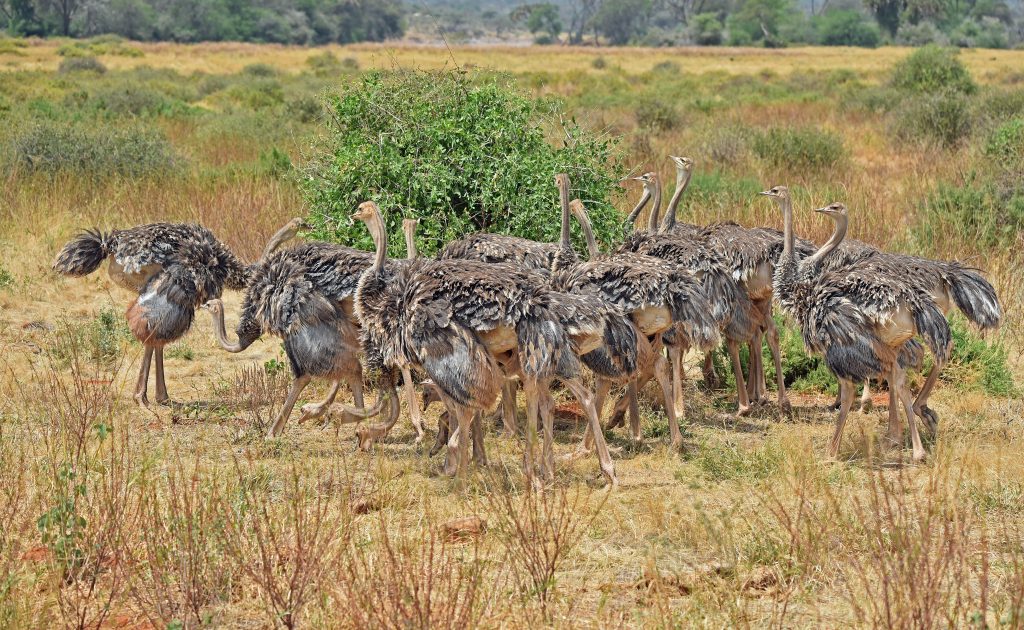
July–October: wildebeest crossing + dry conditions = peak quality across all parks.
June: The Transition Month
Rains tail off, reserves begin to dry out. Wildebeest herds start moving north from Tanzania. Prices are moderate. One of the most pleasant months for a safari — comfortable temperatures, improving roads, building herd activity.
July – October: Peak Season
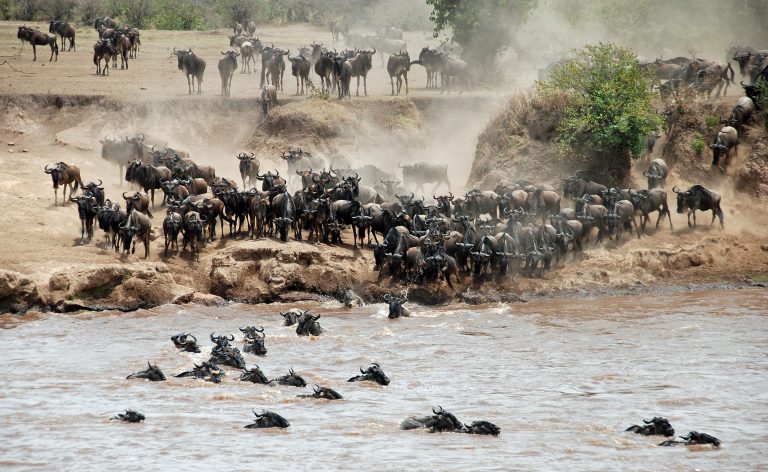
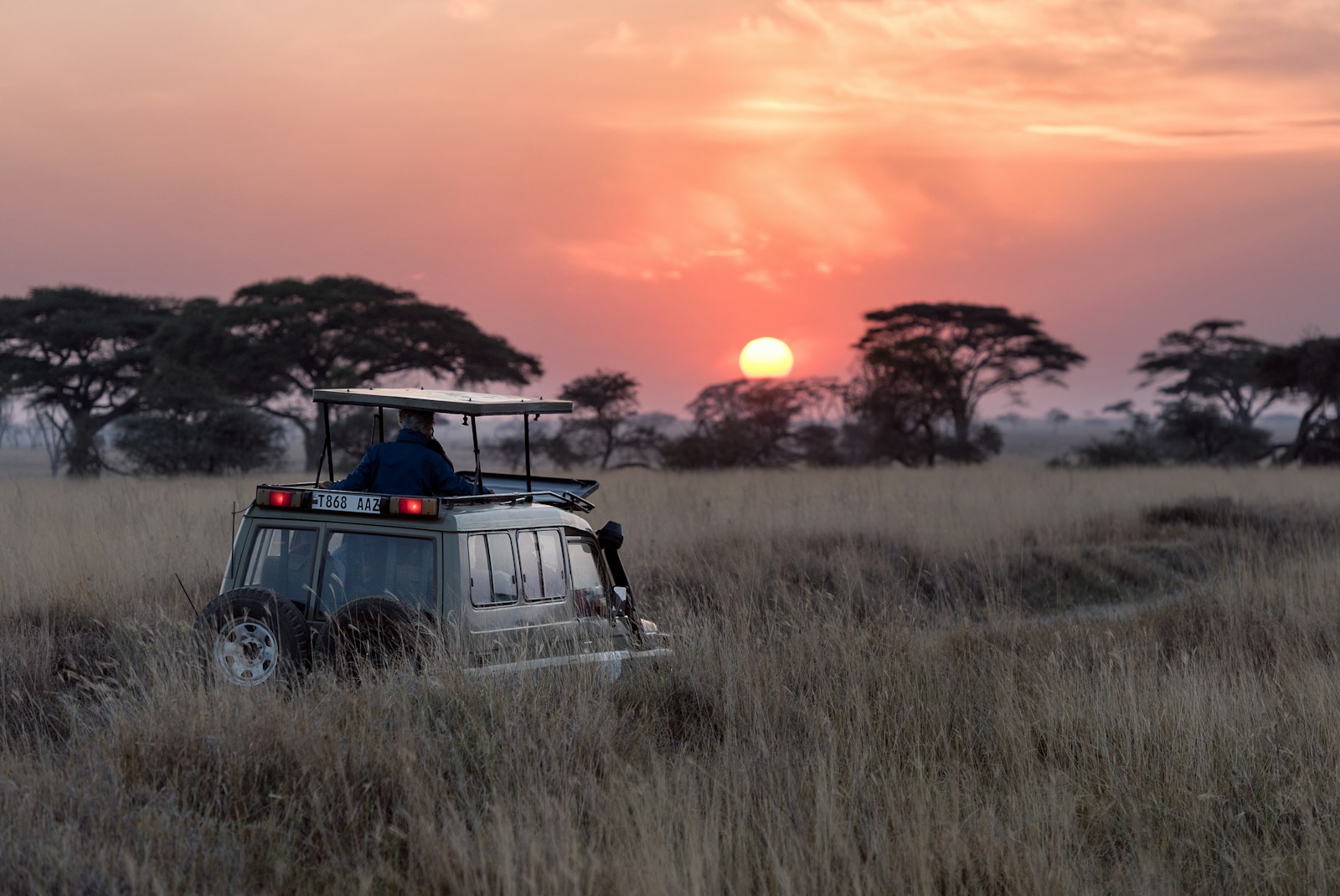
The Great Migration crossing of the Mara River peaks between late July and early October. The Masai Mara is at its most spectacular but also at its most crowded, particularly around the main crossing points. Amboseli’s elephants concentrate around the swamps. Samburu’s northern reserves are excellent in this dry period. Prices are at their highest. Book 12 months ahead for the top camps.
November – December: The Short Rains and Recovery
December is a second high season, driven by European holiday travel; wildlife concentrations are strong in Samburu and Laikipia.
November’s short rains are brief and usually afternoon-only; wildlife disperses but birding peaks, and the landscapes are at their most photogenic.
Short, sharp rains fall in November, greening the landscape quickly. Wildebeest begin moving south again. Crowds thin significantly. A genuinely good time for value-focused travellers who do not need to see a Mara River crossing.
“Every month in Kenya has something to recommend it — the question is what you’re optimising for. If the migration crossing is the goal, July to October is non-negotiable. If you want quality sightings, fewer vehicles, and half the price, January and February are genuinely excellent. The rains in April are not the problem most people imagine — the landscapes are extraordinary and you often have the parks to yourself.””
— Nikos Pocock, Managing Director, Africa Calling Safaris (Nairobi, 2024)
Simple rule: If the wildebeest crossing is non-negotiable, go in August or September. If budget is the priority, go in November or April. If you want great game viewing without the Mara crowds, go to Amboseli, Samburu or Laikipia in October.
Africa Calling builds custom itineraries for every season. Tell us your dates and priorities and we will design accordingly.
Choosing Between Destinations Across the Season
The right time to visit Kenya often depends as much on where you are going as when. The Masai Mara’s migration corridor peaks from late July to early October, but Amboseli’s elephant concentration is strongest in the dry season from June through October when the swamps are surrounded by animals. Samburu’s wildlife viewing is consistent year-round, with the dry months (June to October and January to February) producing the most concentrated activity along the Ewaso Ng’iro River. Laikipia’s private conservancies, which hold African wild dog and black rhino, are excellent from June through November.
Photography conditions also vary by season in ways that matter. The long rains (April to May) produce dramatic skies, vivid green vegetation and unusual atmospheric light — conditions that experienced wildlife photographers often prefer to the flat clarity of peak season. The short rains (November) are brief enough to allow full game-drive days in most weeks.
The Kenya Wildlife Service maintains updated reserve status pages, including any road or gate closures caused by seasonal flooding. For detailed information on what to expect at each destination during your specific travel window, our guides to the wildebeest migration and Amboseli’s elephants provide month-specific advice. The safari budget guide covers how seasonal pricing affects the total cost of your trip.
The Effect of Climate Variability on Safari Timing
The seasonal framework above reflects long-term averages. In practice, the timing of Kenya’s two rainy seasons has become less predictable since approximately 2010. The long rains (March–May) have arrived later and been shorter in several recent years; the short rains (October–November) have been heavier but more variable in distribution. For the Masai Mara, this has translated into greater year-to-year variability in the wildebeest crossing window — some seasons peaking in late July, others not until mid-September. For Amboseli, drought years compress the dry-season game concentrations around the swamps but can also trigger exceptional wildlife density. The practical implication: if your travel dates are fixed, verify current-season conditions with your operator as the travel window approaches rather than relying solely on historical averages.
Seasonal Tourism and Conservation Impact
Travelling in the low season — April, May, November — is not only less expensive; it actively supports conservation by distributing visitor pressure across the year and reducing vehicle crowding at sighting events. Kenya Wildlife Service data show that the Masai Mara’s peak-season vehicle congestion around lion sightings can exceed 40 vehicles simultaneously, a level that disrupts hunt behaviour and cub socialisation according to published research in the journal Oryx. Africa Calling Safaris caps its groups at three vehicles per sighting and encourages clients to consider low-season travel for a higher-quality, lower-impact experience.
Frequently Asked Questions
Sources and Further Reading
- Kenya Meteorological Department. Kenya Climate Guide: seasonal rainfall patterns. meteo.go.ke
- Kenya Tourism Board. Kenya Tourism Performance Report 2024. tourism.go.ke
- Kenya Wildlife Service. Official park and reserve visitor guidelines. kws.go.ke
- African Wildlife Foundation. Kenya safari destination overview. awf.org
What to Remember
- Book lodges 6–12 months ahead for peak season. July–October is the most-requested period in Kenyan safari history; quality camps sell out a year in advance.
- The ‘off-season’ is not actually off. April–May has the lowest prices and the greenest landscapes; the Mara still has its resident wildlife — only the roads are muddier.
- January and February are the hidden gem. Dry, warm, uncrowded, and with excellent big-cat sightings — often better value than August with near-peak wildlife viewing.
Visited Africa Calling Safaris? We would love to hear your story.
Share Your ExperienceMore from Safari News
All stories-
Travel Tips
Lake Nakuru: Flamingos, Rhinos and the Rift Valley in One Park
Lake Nakuru in Kenya's Rift Valley is one of the most immediately spectacular wildlife destinations in Africa. On a good day, the entire shoreline of this shallow alkaline lake is stained pink…
-
Travel Tips
Safari Photography Equipment: What to Bring and Why
Safari photography has specific demands that differ significantly from urban or travel photography. The distances involved, the speed of wildlife action, the vehicle vibration, the dust and the extreme contrast between bright…
-
Travel Tips
The Wildebeest Migration: A Month-by-Month Timing Guide
The wildebeest migration is the largest overland movement of mammals on Earth: approximately 1.5 million wildebeest, 400,000 zebra and 200,000 Thomson's gazelle moving in a continuous circuit through the Serengeti-Masai Mara ecosystem…