Serval Cats in Kenya: The Precision Hunter of the Long Grass
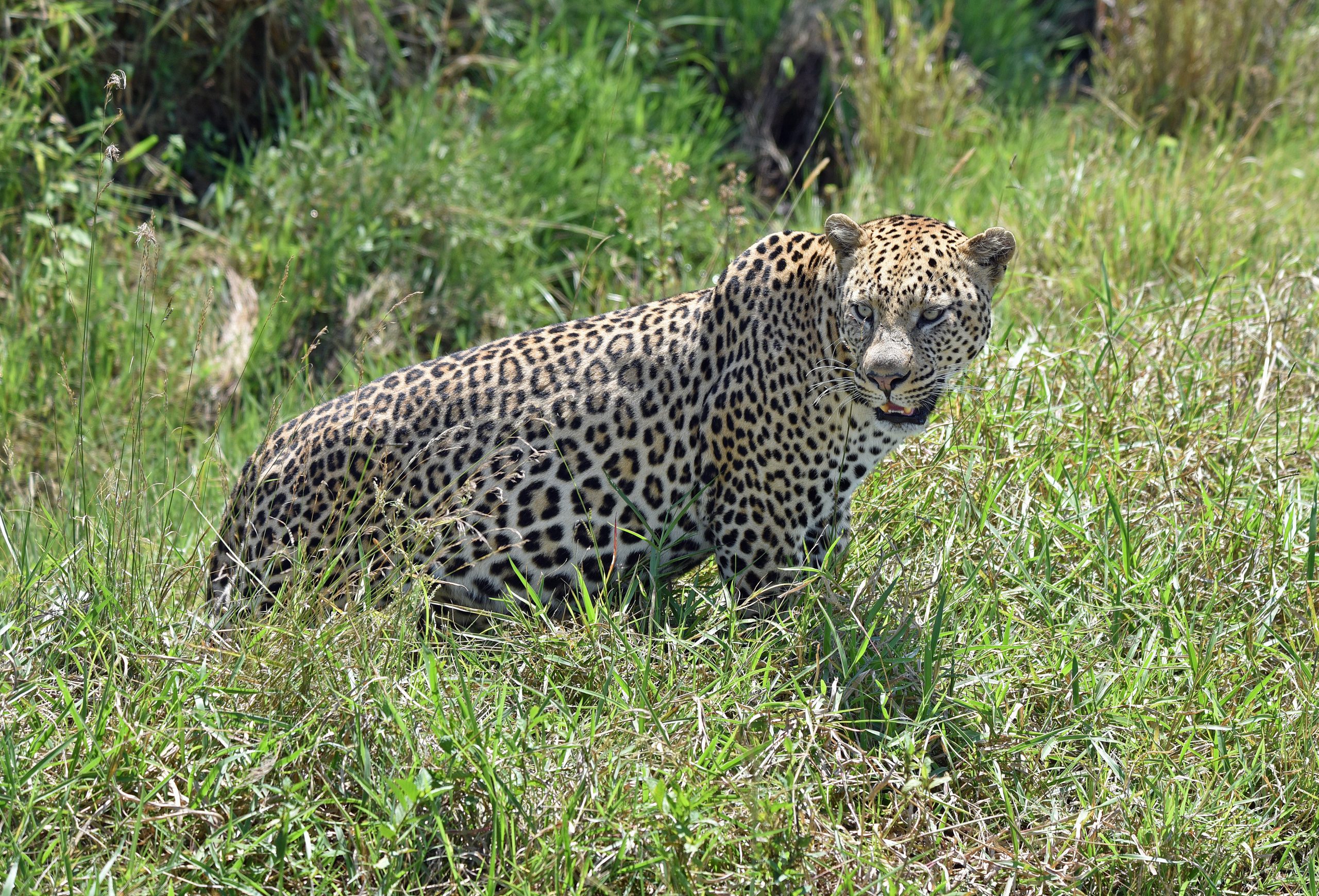
The serval is one of Africa’s most elegant and least-studied wild cats. Slender, long-legged, and spotted, it occupies a distinctive ecological niche between the small cats and the larger predators that draw safari vehicle crowds.
Anatomy Built for Hunting
The serval’s ears are the largest relative to head size of any cat species. They function as directional microphones, allowing the animal to locate rodents moving under grass from several metres away. Once prey is detected, the serval performs a characteristically high vertical leap — up to 3 m into the air — before landing with front paws on the prey below. This technique achieves a hunting success rate of approximately 50%, compared with the lion’s 25–30%.
Habitat and Distribution in Kenya
Servals prefer areas of tall grass near water, making the Masai Mara ecosystem and the Rift Valley wetlands prime habitat. They are solitary and largely nocturnal or crepuscular, which explains why daytime safari sightings are considered a genuine bonus. Dawn and dusk game drives offer the best opportunities. Males hold territories of 12–20 km²; females’ ranges are smaller.
Nikos Pocock, Head Guide & Co-founder, Africa Calling Safaris
Conservation Status
Servals are listed as Least Concern by the IUCN, though local populations are threatened by wetland drainage, habitat conversion to agriculture, and persecution by poultry farmers. The illegal pet trade also removes individuals from wild populations.
Where in Kenya are servals most reliably seen?
The Masai Mara and Naboisho Conservancy have good serval populations. Early morning drives in areas with tall grass near seasonal streams offer the best chance of sightings.
How big is a serval compared to other African cats?
Servals weigh 9–18 kg — larger than a domestic cat, smaller than a caracal. They are visually distinctive for their very long legs and large, rounded ears.
Is the serval related to the cheetah?
They share some physical similarities (long legs, spotted coat) but are not closely related. The cheetah’s closest living relative is the puma; the serval belongs to the Leptailurus genus.
Are servals ever kept as pets?
The illegal pet trade does occur. Servals do not make suitable pets — they are obligate wild animals that suffer significantly in captivity and pose risks to owners once adult.
Visited Africa Calling Safaris? We would love to hear your story.
Share Your ExperienceMore from Safari News
All stories-
Events & Conservation
Elephant Poaching and Recovery in Kenya: A Conservation History
The story of African elephant conservation is one of catastrophic decline, hard-won legal reform, and cautious recovery. Kenya sits at the centre of both the crisis and the comeback. Key Message: Kenya’s…
-
Travel Tips
Nairobi City Stopover: What to Do With 48 Hours in Kenya’s Capital
Nairobi is often dismissed as a transit city for safari travellers. This is a mistake. Kenya’s capital is one of sub-Saharan Africa’s most dynamic cities — a hub of finance, technology, conservation,…
-
Travel Tips
Zebra Migration in Kenya: The Movement Behind the Migration
Most visitors know about the wildebeest migration in the Masai Mara. Fewer realise that the world’s largest zebra migration happens in Botswana, and that Kenya hosts its own significant zebra movements that…