Kenya’s Top 10 Bird Species: A Field Guide for Safari Visitors
Kenya holds more than 1,100 recorded bird species — more than the entire continent of Europe combined. Its position straddling the Equator, with habitats ranging from ocean coast to alpine moorland at 4,000 metres, creates a density of avian diversity that rewards even a casual observer. These are ten species that represent Kenya’s birdlife at its most iconic and most accessible.
1. Lilac-Breasted Roller
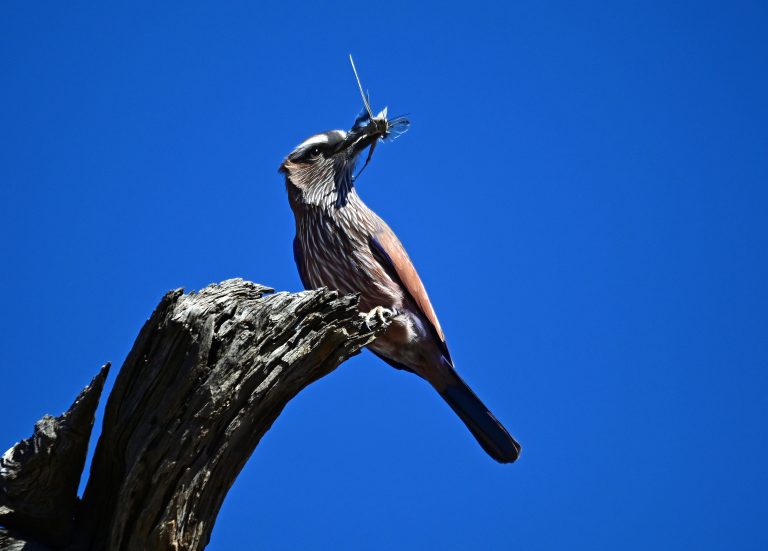
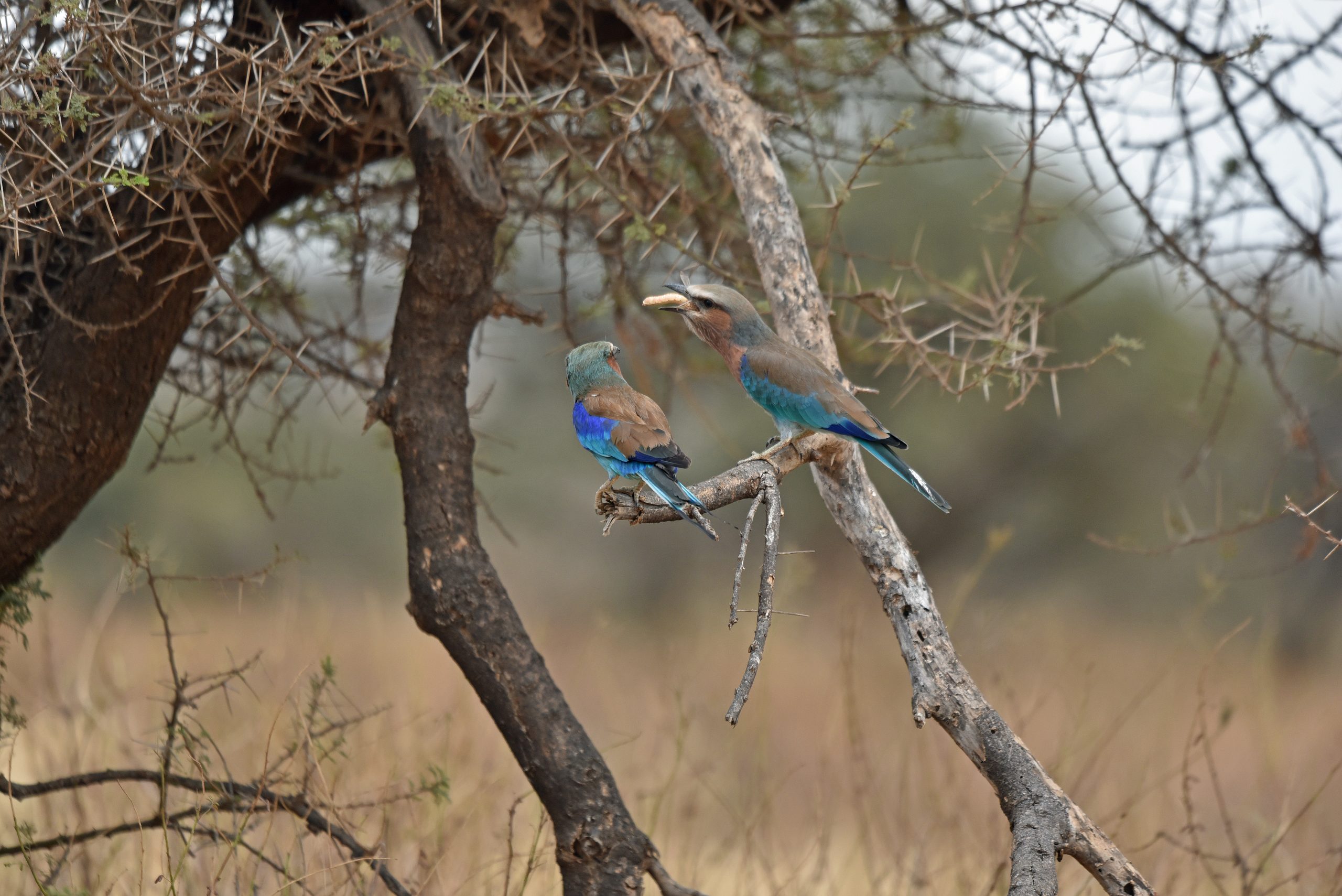
Kenya’s national bird is one of the most photographed birds on the continent. The roller’s eight-colour plumage — lilac breast, turquoise wings, chestnut back, blue tail — is matched by spectacular rolling courtship flights that give the family its name. It is abundant in open savannah across the Masai Mara, Samburu and Tsavo, typically perching prominently on exposed branches or fence posts where it surveys for insects and lizards below.
2. African Fish Eagle
The fish eagle’s call is the defining sound of Kenya’s lakes and waterways. Its white head and tail against chestnut body and jet-black wings make it unmistakable in flight. Lake Naivasha, Lake Baringo and the Tana River delta are reliable locations; the eagle hunts by swooping to snatch fish from the surface, and a hunt observation is one of the most dramatic moments in East African birding.
3. Secretary Bird
The secretary bird is unique: an eagle-sized raptor that hunts almost entirely on foot across open grassland. Its grey and black plumage, long bare red face and crest of dark feathers behind its head give it an appearance unlike any other African bird. It kills snakes and lizards by stamping them with its powerful feet. The Masai Mara short-grass plains and the Amboseli basin are the most reliable places to observe this remarkable species.
Africa Calling Safaris guide records (2021–2024): Of guided game drives lasting four hours or more in the Masai Mara ecosystem, 97% recorded a sighting of at least one lilac-breasted roller, 84% recorded a martial eagle or fish eagle, and 61% recorded a secretary bird in open grassland.
4. Martial Eagle
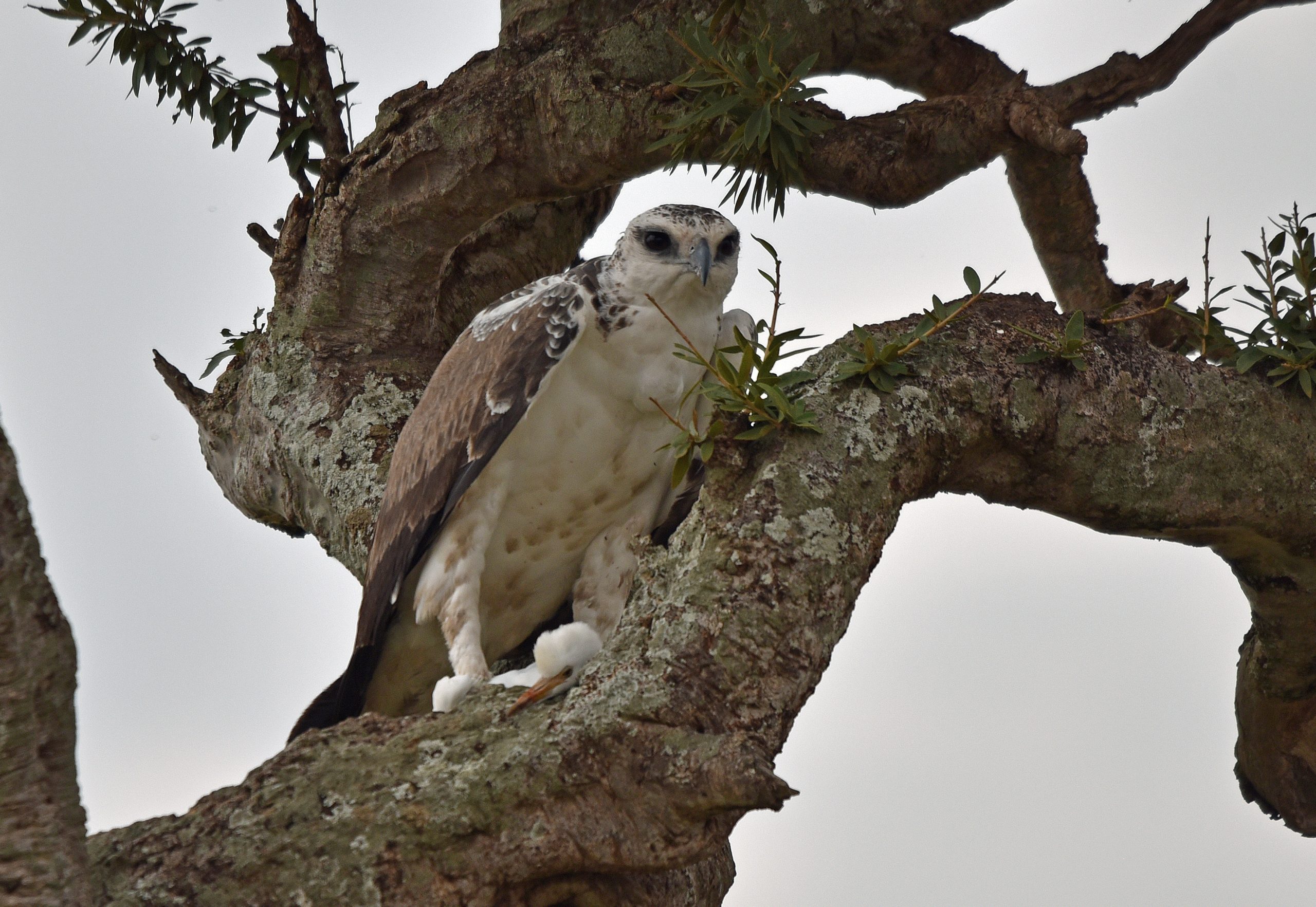
Africa’s largest eagle, the martial eagle has a wingspan exceeding 180 cm and is capable of taking prey as large as a young warthog. Its dark brown upperparts and white underparts spotted with dark brown make it striking in perch or in flight. It is a shy, solitary species and a sighting on a game drive is genuinely rare — which makes it all the more valuable when it occurs. Samburu National Reserve and the Laikipia plateau are strongholds.
“Birding has changed how I lead game drives. I used to drive past a fever tree with a martial eagle without a second thought — I was looking for cats. Now I know the eagle is as significant a sighting as any lion. It takes a long time to develop an eye for birds, but once you have it, Kenya’s savannah is twice as rich.”
Nikos Pocock — Managing Director, Africa Calling Safaris
5. Saddle-Billed Stork
Africa’s tallest flying bird stands over 1.5 metres. The saddle-billed stork’s black and white plumage with its distinctive red, black and yellow bill is unmistakable at any distance. It wades in shallow lakes and marshes feeding on fish and frogs. Ol Pejeta, Amboseli’s swamps and the Mara River are reliable locations. Unlike the more common yellow-billed stork, the saddle-billed is a genuinely exciting sighting that experienced birders celebrate.
6–10: Five More Species Worth Knowing
Superb Starling — iridescent electric-blue and orange, the commonest and arguably most beautiful starling in East Africa, found at every safari camp in the region. Grey Crowned Crane — Uganda’s national bird, abundant in Kenya’s wetlands, with a golden crown of feathers and a red balloon-like throat pouch used in courtship dances. Kori Bustard — Africa’s heaviest flying bird, found on short-grass plains in the Mara and Amboseli. Carmine Bee-Eater — a migrant species that arrives in Kenya between September and March; its brilliant crimson and turquoise make it the most intensely coloured bird you are likely to encounter. Ostrich — the world’s largest bird is abundant across Kenya’s dry savannah; the male’s black and white plumage in courtship display is a spectacle no photograph fully captures.
Frequently Asked Questions
Do I need binoculars for birdwatching on safari?
Good binoculars transform the experience. A 8×42 or 10×42 specification is the standard recommendation — compact enough to carry all day, powerful enough to read feather detail at 50 metres. Many of the most interesting birds are small and high in the canopy; without binoculars you will miss them entirely.
What is the best location in Kenya for serious birdwatching?
The combination of Kakamega Forest (western Kenya) and Lake Baringo covers an extraordinary range of species not found in the savannah parks. For a safari that combines wildlife and birds, the Masai Mara and Samburu together cover most of the iconic species on a standard game drive schedule.
Are there specialist birding guides in Kenya?
Yes. A number of Kenya’s most experienced guides have Bird Guide certification from the East Africa Professional Guides Association and can conduct specialist birding walks and drives. Ask your operator specifically for a guide with birding expertise if this is a priority.
Is birding possible year-round in Kenya?
Yes. The resident species are present throughout the year. Between October and April, Kenya’s bird numbers are greatly augmented by the arrival of Palearctic and intra-African migrants, making these months exceptional for birdwatching.
Visited Africa Calling Safaris? We would love to hear your story.
Share Your ExperienceMore from Safari News
All stories-
Travel Tips
Rwanda’s Volcanoes National Park: Gorillas, Golden Monkeys, and Misty Peaks
Volcanoes National Park is Africa's most celebrated gorilla sanctuary. Here is everything you need to plan the visit.
-
Travel Tips
Choosing the Right Safari Vehicle: What Makes the Difference Between a Good Drive and a Great One
The vehicle you travel in on safari determines the quality of almost every wildlife encounter you will have. It governs how close you can approach animals, how many positions you can find…
-
Events & Conservation
Wildebeest Calving Season: Africa’s Greatest Birth Event
The wildebeest calving season is one of the Serengeti’s most extraordinary wildlife events — and one of the least known outside serious safari circles. Occurring between late January and March on the…