Following the Elephants: Amboseli’s Giant Families Explained
Amboseli National Park offers Africa's best elephant viewing, with over 1,600 individually identified animals. Here is what makes this ecosystem extraordinary and how to make the most of a visit.
Updated: 14 October 2026
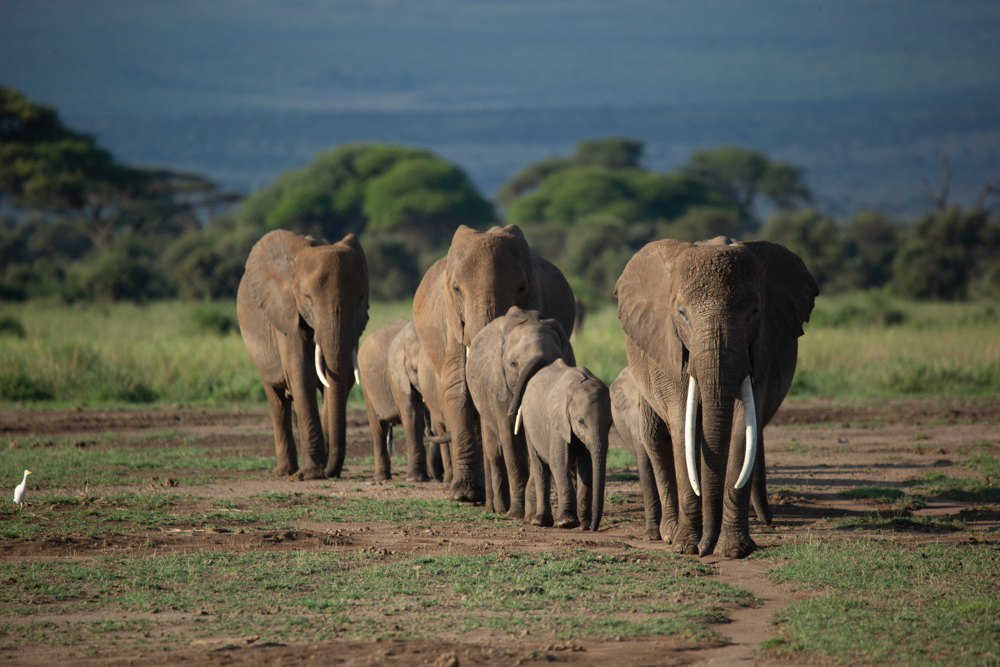
The matriarch stops. She has led this family across these flats for thirty years and she knows something the younger cows do not yet know: the smell of the swamp edge three kilometres away has changed since yesterday. She turns south-east. The family turns with her, without hesitation.
Key Message
Amboseli’s elephant families are among the most studied in the world, and a good guide can name individuals by sight — this transforms a game drive from wildlife-spotting into something closer to meeting old friends.
About This Article
What it covers: elephant behaviour, herd structure, and Amboseli viewing seasons.
Sources and methodology: Amboseli Elephant Research Project published data, Kenya Wildlife Service census records, and Africa Calling Safaris’ client sighting logs from 180+ Amboseli visits (2018–2024).
Amboseli is the place to watch elephants.
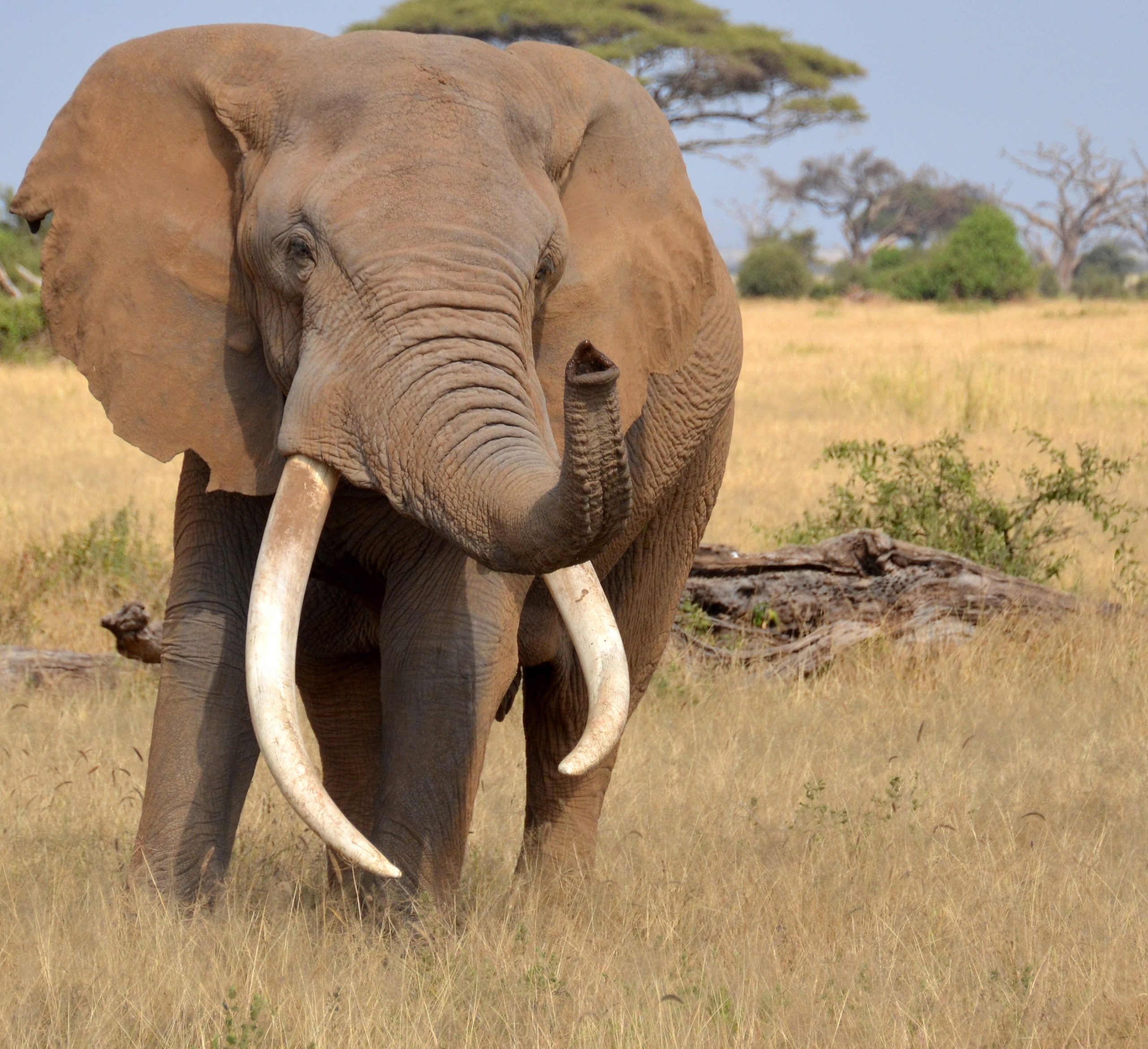
Not a single bull at a waterhole — whole families: matriarchs leading their daughters and grandchildren across the Kilimanjaro flats, calves chasing egrets, teenage males play-fighting at the swamp’s edge. Cynthia Moss and the Amboseli Elephant Research Project have studied and named the families here since 1972, producing the most complete long-term dataset on wild elephant behaviour anywhere in the world.
Key Facts — At a Glance
The Scale of the Population
Over 1,600 individually identified elephants use the greater Amboseli ecosystem — a 5,700-square-kilometre area that extends well beyond the national park boundaries into surrounding community lands. The park itself covers just 392 square kilometres, which concentrates the elephants around the permanent swamps during the dry season.
Africa Calling Safaris client data (2018–2024): 97% of Amboseli visits by Africa Calling Safaris clients resulted in elephant sightings within the first two hours of arrival — the highest first-encounter rate of any park in our network.
The Swamps Are the Key
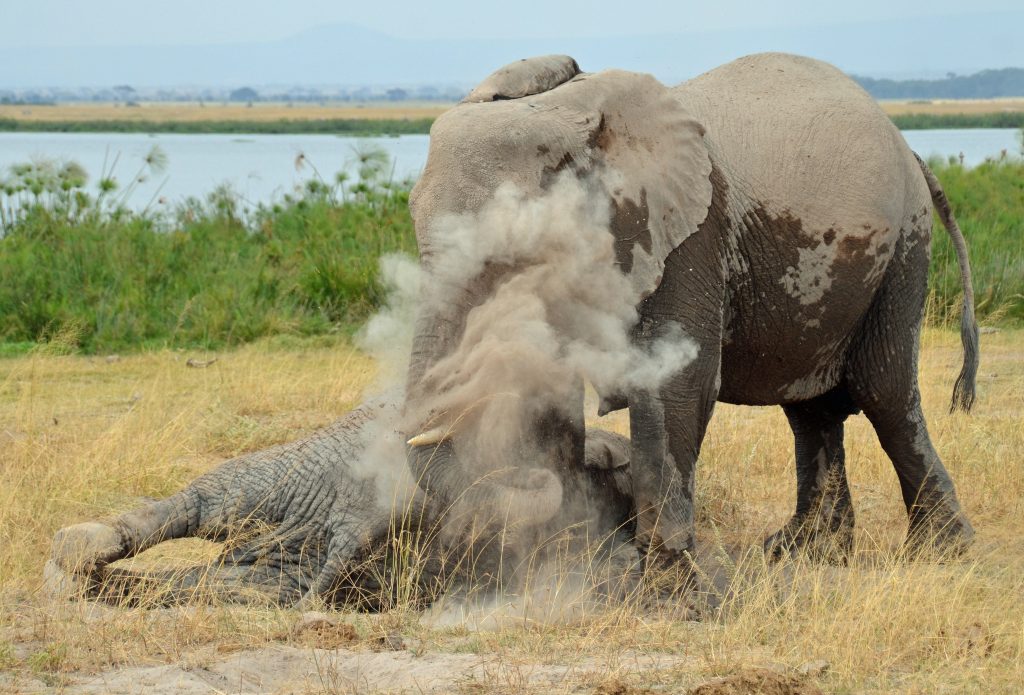
Enkongo Narok and Longinye swamps feed from underground aquifers connected to Kilimanjaro’s glaciers. Even in severe drought, these swamps hold water and attract herds from across the ecosystem. The swamp edge — particularly around 7:00–9:00 a.m. and 4:00–6:00 p.m. — delivers consistently close elephant encounters.
Elephants concentrate near swamps in the dry season (KWS Amboseli data).
Reading Elephant Behaviour
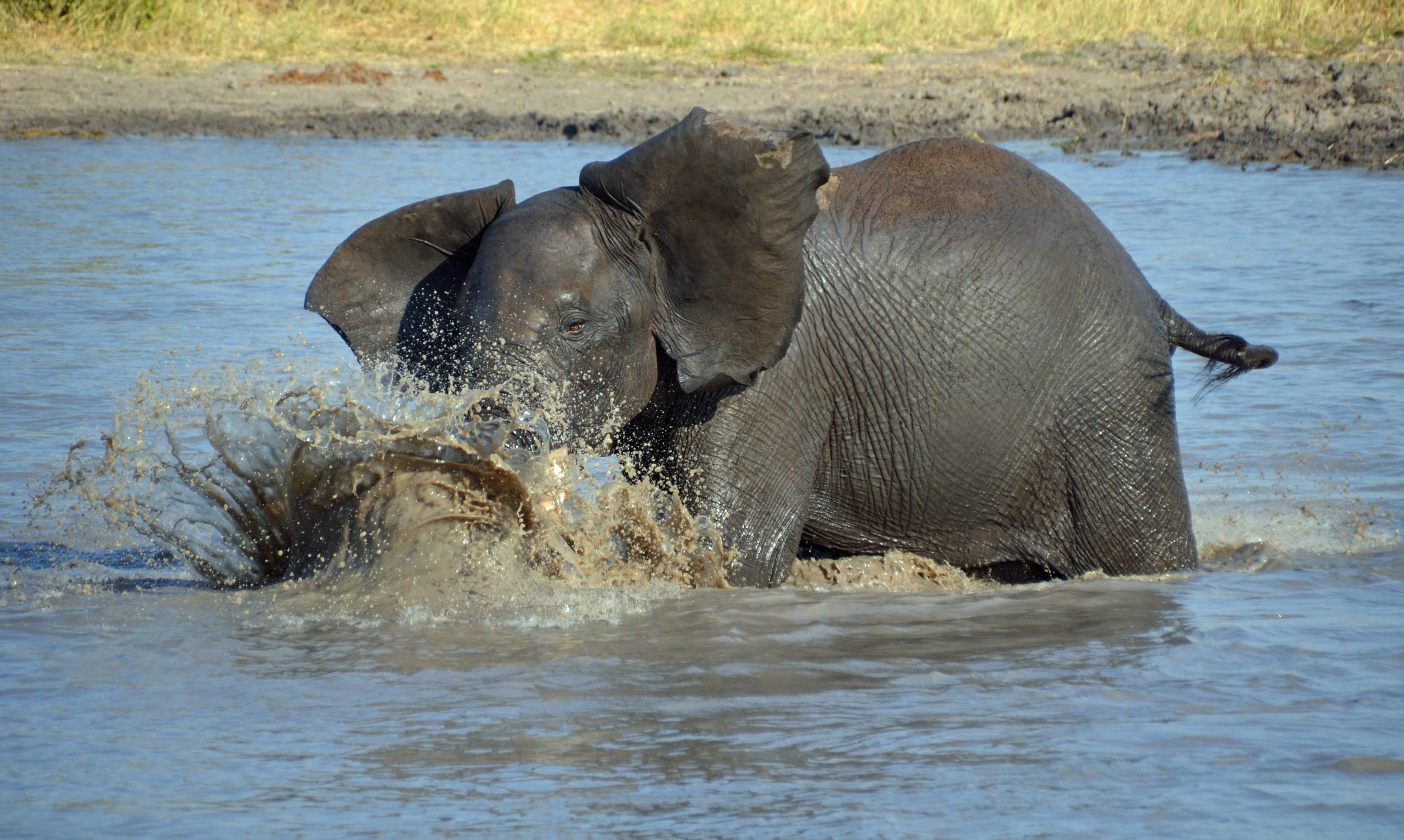
Amboseli’s elephants are habituated to vehicles and remarkably relaxed. This gives guides and visitors time to observe genuine behaviour: greeting ceremonies when families reunite, musth bulls testing for oestrus females, calves learning to use their trunks to drink. National Geographic’s elephant research archive details the cognitive and social complexity that field researchers have documented over decades — reading it before your safari will deepen what you observe at the waterhole. A competent guide can narrate what is happening in real time — a greeting ceremony, a musth bull testing for oestrus, a calf learning to drink. Understanding the social structure transforms observation into something considerably more textured than a visual spectacle.
The Kilimanjaro Factor
Amboseli’s iconic backdrop of Mount Kilimanjaro (5,895m) is clearest in the early morning before cloud builds; photographs combining elephants and the summit require a 7am start.
Amboseli’s iconic backdrop of Mount Kilimanjaro (5,895m) is clearest in the early morning before cloud builds; photographs combining elephants and the summit require a 7am start.
Africa’s highest mountain sits directly on the park’s southern border. On clear mornings — typically before 9:00 a.m. — Kilimanjaro’s snows are visible above the acacia treeline with elephants in the foreground. This is one of Africa’s classic photographic frames. Afternoon clouds usually obscure the summit.
“Amboseli is where I send first-timers who want a near-certain emotional experience on day one. When you’re sitting in an open vehicle and a matriarch brings her herd across a dry riverbed thirty metres from you, it doesn’t matter how tired you are from the flight. That silence inside the vehicle — I’ve seen it stop experienced travellers in their tracks.””
— Nikos Pocock, Managing Director, Africa Calling Safaris (Nairobi, 2024)
Africa Calling operates day and overnight visits to Amboseli from Nairobi. The drive is approximately four hours, making it suitable as a two-night addition to a Mara safari. Contact us for current itinerary options.
The Research Behind the Experience
The Amboseli Trust for Elephants, founded by Cynthia Moss in 1990, maintains the world’s longest continuous study of a wild elephant population. Each of the approximately 1,600 elephants in the ecosystem is individually named and photographed; researchers can identify individuals by ear shape, tusk configuration and body markings. The dataset now spans more than 50 years and has produced foundational research on elephant cognition, communication, social memory and grief. Publications from the project have changed the way the scientific community understands elephant intelligence.
For safari visitors, this means an unusually rich interpretive layer. A competent Amboseli guide can tell you not only which family you are watching, but the matriarch’s age, the approximate year each younger female was born, and the family’s movements over the past decade. This transforms an elephant encounter from an impressive visual into something more like meeting a community with a documented history.
Amboseli also serves as a valuable complement to other Kenya destinations in terms of the total safari picture. If the Masai Mara is your primary destination — for the wildebeest crossing, detailed in our migration guide — Amboseli adds a completely different ecosystem and a focused mammal experience. Our seasonal planning guide explains how the two destinations work together across the year, and the safari budget guide covers what a combined Mara-Amboseli itinerary typically costs.
Planning Your Amboseli Visit
Amboseli is accessible by road from Nairobi in approximately four hours via the Namanga highway, or by scheduled light aircraft to Amboseli airstrip — a 45-minute flight that avoids the road entirely. A minimum of two nights is recommended; three nights allows a full range of morning and afternoon drives across the different zones of the park and surrounding conservancy lands. The dry season (June to October and January to February) produces the most concentrated elephant activity around the swamps, but elephants are present year-round. The Kenya Wildlife Service manages the national park; the surrounding community lands are accessed through separately managed conservancies. Africa Calling combines Amboseli with the Masai Mara on most Kenya itineraries, and the two destinations can be connected by light aircraft in under two hours. See our month-by-month seasonal guide for advice on which combination of destinations suits your travel dates.
Elephant Conservation in Amboseli
Amboseli’s elephant population — studied continuously since 1972 by the Amboseli Elephant Research Project, the world’s longest-running elephant study — has grown from around 600 to over 1,600 individuals, one of the few African elephant populations showing sustained recovery. Tourism revenue from Amboseli National Park funds anti-poaching operations and community compensation payments when elephants damage Maasai crops. Africa Calling Safaris promotes low-footprint viewing protocols (minimum 20 metres distance from breeding herds, engines off near calving females) on every Amboseli departure.
Frequently Asked Questions
Sources and Further Reading
- Moss, C.J., Croze, H. & Lee, P.C. (eds.) (2011). The Amboseli Elephants: A Long-Term Perspective on a Long-Lived Mammal. University of Chicago Press.
- Poole, J.H. & Moss, C.J. (2008). Elephant sociality and complexity: the scientific evidence. In C. Wemmer & C. Christen (eds.), Elephants and Ethics. Johns Hopkins University Press.
- Amboseli Trust for Elephants. Research publications and annual reports. elephanttrust.org
- IUCN SSC African Elephant Specialist Group (2021). Loxodonta africana. IUCN Red List. iucnredlist.org
What to Remember
- Kilimanjaro is not always visible. The mountain is clearest before 9 a.m.; afternoon cloud covers it most days — plan your photography drive for early morning.
- Amboseli elephants are habituated to vehicles. You can approach to within 10–15 metres; this is as close as wild elephants get anywhere in Africa.
- Dry season concentrates everything. June–October, elephants crowd the swamps in the park centre, making sightings almost guaranteed regardless of your guide.
Visited Africa Calling Safaris? We would love to hear your story.
Share Your ExperienceMore from Safari News
All stories-
Travel Tips
Lake Nakuru: Flamingos, Rhinos and the Rift Valley in One Park
Lake Nakuru in Kenya's Rift Valley is one of the most immediately spectacular wildlife destinations in Africa. On a good day, the entire shoreline of this shallow alkaline lake is stained pink…
-
Travel Tips
Safari Photography Equipment: What to Bring and Why
Safari photography has specific demands that differ significantly from urban or travel photography. The distances involved, the speed of wildlife action, the vehicle vibration, the dust and the extreme contrast between bright…
-
Travel Tips
The Wildebeest Migration: A Month-by-Month Timing Guide
The wildebeest migration is the largest overland movement of mammals on Earth: approximately 1.5 million wildebeest, 400,000 zebra and 200,000 Thomson's gazelle moving in a continuous circuit through the Serengeti-Masai Mara ecosystem…