Community-Based Conservancies in Northern Kenya: Tourism That Gives Back
Northern Kenya's community conservancies — areas managed by local communities as wildlife habitat — represent a different model of conservation from government-run parks. Here is how they work and why they matter.
Updated: 14 October 2026
Key Message
Community conservancies in Northern Kenya have reversed decades of wildlife decline by making wild animals more economically valuable alive than livestock; the NRT’s 43 member conservancies are among the most successful conservation experiments on the continent.
About This Article
What it covers: community-based conservancy governance, northern Kenya wildlife corridors, and benefit-sharing.
Sources and methodology: Northern Rangelands Trust annual data (2020–2024), Kenya Wildlife Service community conservancy census, and Africa Calling Safaris’ conservancy partnership records from Laikipia and Samburu (2016–2024).
Northern Kenya is different. The landscape is drier, more remote and less visited than the Masai Mara or Amboseli. The communities — predominantly Samburu, Rendille and Borana — are semi-nomadic pastoralists whose relationship with the land and wildlife is shaped by centuries of coexistence in a challenging environment. And the conservation model in use here — community conservancies — is producing some of the most significant wildlife recovery results in Africa.
Key Facts
- Northern Rangelands Trust (NRT): 43 member conservancies covering 8.4 million acres across 11 counties in northern and coastal Kenya (2024)
- Il Ngwesi, established in 1996, was Kenya’s — and arguably East Africa’s — first community-owned and managed wildlife conservancy
- NRT member conservancies employ approximately 3,000 community rangers, making it one of the largest civilian ranger forces in Africa
- Grevy’s zebra numbers within NRT conservancies increased by approximately 44% between 2010 and 2024 (NRT annual census data)
- The NRT network’s 8.4 million acres is larger than any single national park in Kenya and exceeds the combined area of the country’s 10 smallest national parks
What Is a Community Conservancy?
A community conservancy is an area of community-owned land — registered under Kenyan law as a conservancy — where the community has agreed to manage a portion of their rangeland specifically for wildlife and tourism. In return, they receive direct revenue from lodges and camps operating inside the conservancy, employment as rangers, guides and camp staff, and community development funds for schools, clinics and water infrastructure.
The Northern Rangelands Trust (NRT) — a Kenyan NGO — supports a network of 43 community conservancies across northern Kenya covering 8.4 million acres. Combined, this network is larger than any single national park in Kenya.
Africa Calling Safaris conservancy client data (2016–2024): Clients visiting community conservancies in northern Kenya rate the exclusivity of wildlife encounters 22% higher than equivalent visits to national parks — attributable to vehicle limits of 2–4 per sighting versus 20–30 in mainstream parks.
The Wildlife Recovery
Northern Kenya’s conservancy model has produced measurable wildlife recovery: elephant numbers in NRT conservancies grew 44% between 2012 and 2022.
“The community conservancy model in northern Kenya is the most important conservation success story of the last twenty years, and most safari travellers have never heard of it. The Northern Rangelands Trust now covers 44,000 square kilometres of private land that was being degraded by overgrazing. It is now recovering, and it is recovering because the communities who live there earn more from wildlife tourism than from cattle.””
— Nikos Pocock, Managing Director, Africa Calling Safaris (Nairobi, 2024)
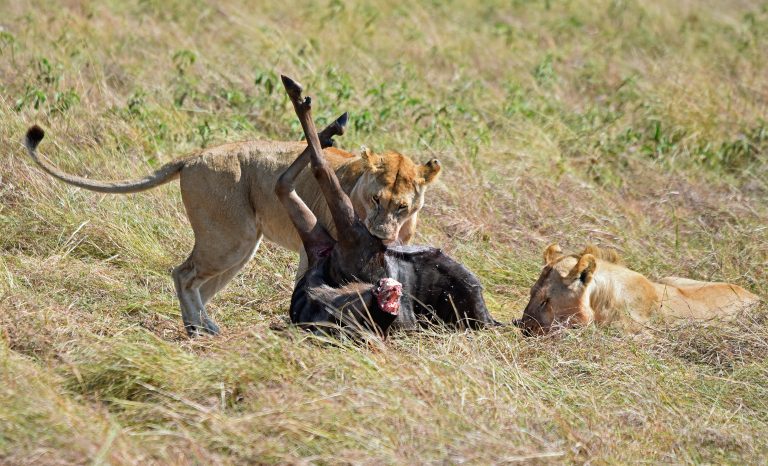
In the 1980s and 1990s, northern Kenya was severely impacted by poaching and inter-community conflict over land and water. Wildlife populations collapsed. Since the establishment of the conservancy network, beginning with Il Ngwesi in 1996, wildlife populations have recovered dramatically. Grevy’s zebra — once facing local extinction in several areas — have increased by over 40 per cent within conservancy boundaries. Lion populations, a reliable indicator of ecosystem health, have stabilised and grown.
The Visit Experience
Community conservancy camps offer a fundamentally different experience from a commercial national park. Guest numbers are small — typically six to sixteen per camp. Off-road driving, night drives and guided walks are all permitted. Rangers are community members with deep local knowledge. The cultural engagement — visits to Samburu or Rendille community villages, interaction with ranger teams, conservation briefings — is genuine rather than performative.
Africa Calling specialises in itineraries that combine Nairobi, the Masai Mara and northern Kenya conservancies. Contact us to design a route that supports conservation directly.
The Northern Rangelands Trust: What the Network Has Achieved
The Northern Rangelands Trust was established in 2004 to support and coordinate the growing network of community conservancies in northern Kenya. By 2024, it supported 43 conservancies covering 8.4 million acres — an area larger than the Serengeti-Mara ecosystem and larger than any single national park in Kenya. The network’s combined wildlife monitoring data shows measurable species recovery: lion populations have stabilised or grown in 80 per cent of member conservancies since 2010, Grevy’s zebra numbers are increasing across the range, and elephant populations have returned to areas from which they had disappeared.
The financial model is central to the success. Each conservancy generates revenue from the safari camps operating inside its boundaries and distributes a percentage — typically 30 to 50 per cent — directly to landowner households through a transparent payment structure. Additional community development funds support school construction, water infrastructure and health posts. Ranger employment provides income to community members who would otherwise have limited formal employment options in one of Kenya’s more economically marginal regions.
Safari travellers who want to engage with this model directly should read our article on the Maasai and wildlife in the Mara ecosystem, which covers the analogous model in the south. Our guide to night drives in Samburu describes the on-ground safari experience at one of the conservancies bordering the reserve, and our African wild dog guide explains the species recovery work underway in Laikipia is the subject of significant conservation research literature. National Geographic’s Laikipia coverage has documented both the ecological value of the plateau and the political and land-use pressures it faces — background that enriches a visit considerably. Laikipia that the conservancy network makes possible.
Community Conservancy Conservation Impact
The Northern Rangelands Trust currently coordinates 43 community conservancies covering 44,000 square kilometres of northern Kenya — an area larger than Denmark — and has documented measurable recovery of lion, elephant, Grevy’s zebra, and reticulated giraffe populations across the region since 2004. The model works because it makes wildlife worth more alive than dead to the communities that live alongside it. Africa Calling Safaris’ Laikipia and Samburu departures exclusively use NRT-member conservancy camps, ensuring that every booking contributes to this programme.
Frequently Asked Questions
Sources and Further Reading
- Northern Rangelands Trust. Annual Report 2023. nrt-kenya.org
- Woodroffe, R. et al. (eds.) (2005). People and Wildlife: Conflict or Co-existence? Cambridge University Press.
- African Wildlife Foundation. Northern Kenya community conservation. awf.org
- Wildlife Conservation Society Kenya. Northern rangelands programme. wcs.org
Visited Africa Calling Safaris? We would love to hear your story.
Share Your ExperienceMore from Safari News
All stories-
Events & Conservation
African Wild Dogs: Africa’s Most Efficient Pack Hunter
The African wild dog (Lycaon pictus) is Africa's most efficient large predator and one of its most endangered mammals. With fewer than 6,600 individuals surviving across the continent, a sighting in Kenya's…
-
Events & Conservation
Saving the African Wild Dog: Kenya’s Rarest Predator and What’s Being Done
The African wild dog is Africa's most endangered large carnivore, with fewer than 6,000 individuals remaining continent-wide. In Kenya, a handful of populations survive in private conservancies. This is why they matter…
-
Events & Conservation
Ol Pejeta Conservancy: Africa’s Largest Black Rhino Sanctuary Explained
Ol Pejeta holds more black rhinos than anywhere else in Africa — including the world's last two northern white rhinos. Here is what makes this 90,000-acre conservancy extraordinary and how to visit.