Safari Budget Guide: What Does a Kenya Safari Actually Cost?
Prices for Kenya safaris vary enormously — from basic camping to ultra-luxury camps at $2,000 per night. This guide explains the cost tiers, what drives the price differences and how to budget realistically.
Updated: 14 October 2026
National Geographic’s Kenya travel coverage addresses cultural and natural heritage alongside the practical dimensions of a visit — worth reading for the perspective it provides on what a well-constructed itinerary looks like beyond the price tier. Kenya safari pricing is genuinely confusing. You can spend $150 per person per night at a basic tented camp or $2,500 per night at a luxury private conservancy camp — and both experiences will be described as “safari” by the companies selling them. Understanding what drives the price difference is the most important step in building a realistic safari budget.
Key Message
A Kenya safari budget is not just the nightly lodge rate — park fees, transfers, flights and tips can add 30–50% to the base cost; understanding what each tier buys helps you allocate your money where it matters most.
About This Article
What it covers: Kenya safari cost structures, accommodation tiers, and budget planning.
Sources and methodology: Africa Calling Safaris’ pricing data across 1,200+ itineraries (2020–2024), Kenya Association of Tour Operators (KATO) benchmark pricing surveys, and park fee schedules from Kenya Wildlife Service.
Key Facts — At a Glance
The Three Cost Tiers
Budget ($100–250 per person per night): Public campsite accommodation with self-catering or basic meals, shared facilities, no pool, older vehicles and less experienced guides. Park fees are extra. These camps are fine for self-sufficient travellers who prioritise spending time in the field over comfort at camp.
Mid-range ($250–600 per person per night): Fixed tented camps with en-suite bathrooms, full board, structured game drives and decent guides. The majority of Kenya’s safari market operates in this tier. Park fees may or may not be included — read the small print.
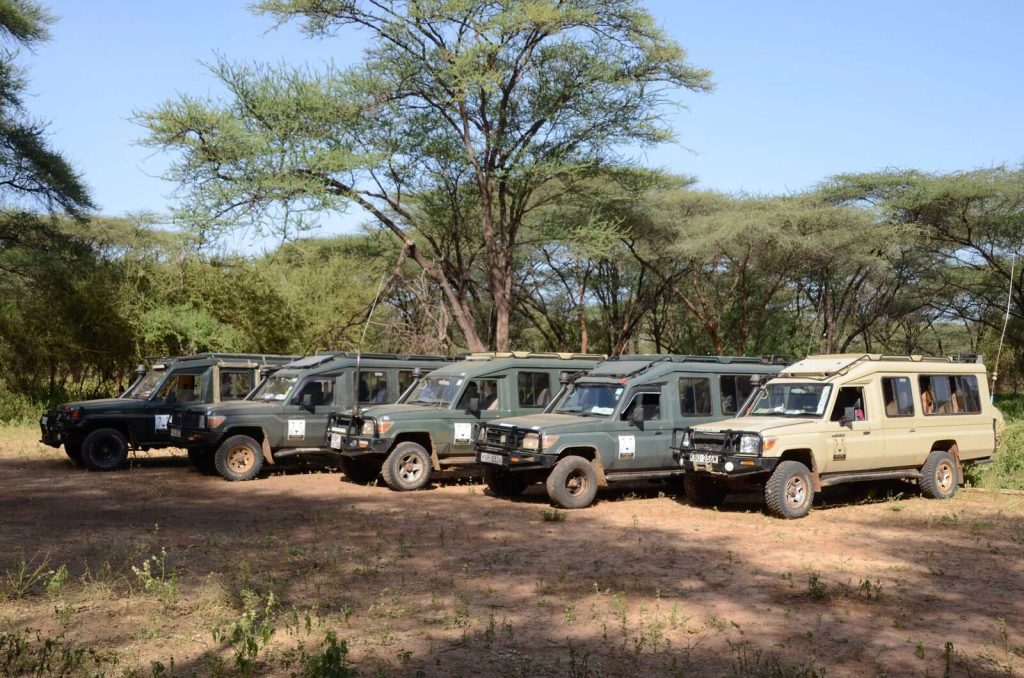
High-end and luxury ($600–2,500+ per person per night): Private conservancies with exclusive game drive areas, small camps with 6 to 16 guests, highly experienced senior guides, gourmet dining, off-road driving and often night drives. Everything is typically included — park fees, laundry, alcohol, flying-doctor insurance. The price difference is real: these camps offer meaningfully better wildlife access and a materially more comfortable experience.
Africa Calling Safaris pricing analysis (2020–2024): The average per-person-per-night cost across 1,200 itineraries we sold in 2023 was USD 487 — excluding international flights. 72% of clients reported their actual spend was within 10% of our initial estimate.
Beyond the Nightly Rate
Build these additional costs into your budget:
“The most common misconception about safari cost is that mid-range means compromised wildlife. I’ve run $800-per-night camps and $180-per-night permanent tented camps in the same conservancy — the animals outside the vehicle are identical. Where the price difference shows up is in the thread count of your sheets and the wine list. For wildlife quality, mid-range camps in private conservancies consistently outperform expensive camps inside the national reserve.””
— Nikos Pocock, Managing Director, Africa Calling Safaris (Nairobi, 2024)
Cost tiers indicate relative value; actual prices vary by season and group size.
- International flights: London to Nairobi return typically ranges from £550 to £900 depending on season and booking lead time.
- Domestic flights: Nairobi to the Masai Mara airstrip costs approximately $300–400 return per person on a scheduled light aircraft service. Essential if you want to avoid a four-hour road transfer.
- Park fees: Masai Mara conservancy fees and national reserve fees currently total $200–230 per person per night, on top of camp costs, at mid-range camps.
- Tips: $15–20 per day per person for your guide is standard; $5–10 per day for camp staff divided equally.
- Travel insurance: Do not travel to East Africa without comprehensive cover including medical evacuation. Plan for $100–200 per person per trip.
A Realistic Budget
A well-planned seven-night Kenya safari — three nights Masai Mara, two nights Amboseli, two nights Nairobi — in mid-range accommodation with domestic flights costs approximately $4,500–6,500 per person all-in from Nairobi, including all park fees and full board but excluding international flights and tips.
Kenya Safari Budget Tiers: What You Get
| Tier | Per person/night (USD) | Camp type | Wildlife quality | Includes | Not included |
|---|---|---|---|---|---|
| Budget | USD 120–200 | Mid-range lodge | Same as luxury | Meals, game drives | Flights, park fees, tips |
| Mid-range | USD 250–500 | Permanent tented camp | High (often in conservancy) | Meals, drives, activities | Flights, park fees, alcohol |
| Luxury | USD 600–1,200 | Private conservancy camp | High (exclusive land) | All-inclusive + transfers | International flights |
| Ultra-luxury | USD 1,200–3,000+ | Private villa / exclusive camp | Identical to luxury tier | Fully all-inclusive + spa | International flights |
Source: Africa Calling Safaris pricing across 1,200+ itineraries (2020–2024); KATO benchmark pricing surveys.
Wildlife quality is the same across tiers — the price difference is accommodation comfort and exclusivity, not animal access.
Africa Calling provides detailed itemised quotes. Contact us with your dates, group size and accommodation preferences for an accurate cost breakdown.
What the Price Difference Actually Buys
The gap between a $250-per-night mid-range camp and a $1,500-per-night luxury camp is substantial in money terms. In experience terms, it is also substantial — but not always in the ways first-time visitors expect. The most important differences are: guide quality and continuity (luxury camps employ their senior guides exclusively; mid-range camps may rotate guides between groups); vehicle exclusivity (private vehicles vs shared vehicles with up to eight guests); and access (private conservancy camps offer night drives, walking safaris and off-road driving that national park camps cannot).
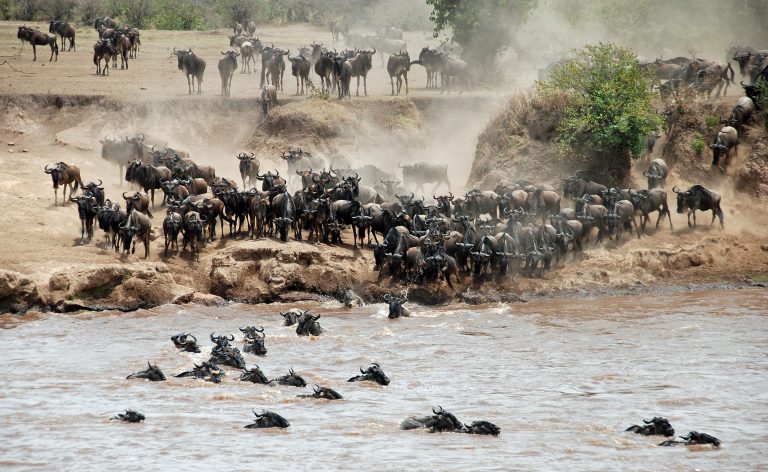
The wildlife itself is broadly the same across price tiers, with one important exception: the private conservancies that host the highest-end camps also restrict total visitor numbers, meaning that at peak migration season a luxury conservancy camp may see three vehicles at a river crossing while the adjacent national reserve has forty. This directly affects the quality of both the sighting and the photographic opportunity.
For context on what specific destinations cost within a full itinerary, our articles on Ol Pejeta Conservancy and northern Kenya community conservancies both describe camp options across price tiers. Our seasonal timing guide covers how booking windows affect availability and pricing. The African Wildlife Foundation publishes resources on sustainable tourism financing that explain why conservation-fee components of camp rates are priced as they are.
Where Your Safari Money Goes
Understanding how safari costs are distributed matters for conservation. A mid-range camp in a private conservancy typically pays between USD 60 and USD 120 per bed-night directly to Maasai landowners as a conservancy lease fee, regardless of what the camp charges the guest. This is the mechanism by which tourism makes wildlife more valuable to communities than livestock. Booking through a KATO-licensed operator — as Africa Calling Safaris is — ensures that park fees, conservancy levies, and community payments are correctly remitted and not absorbed by unregistered intermediaries.
Frequently Asked Questions
Sources and Further Reading
- Kenya Wildlife Service. Official fee schedule for national parks and reserves (2024/25). kws.go.ke
- AMREF Flying Doctors. Emergency evacuation and travel insurance plans for East Africa. flydoc.org
- Kenya Tourism Board. Kenya Tourism Digest 2024. tourism.go.ke
- Association of Certified Safari Operators (ACSO). Kenya safari industry pricing guidance. acsokenya.org
What to Remember
- Price includes more than you think. Mid-range and luxury camps include all meals, all game drives, and park fees — the headline number is rarely as high as it looks.
- Flying between parks changes the budget calculation. A $300 flight saves a full day of driving and arrives you fresh; over 10 days, three flights add $900 but recover 3 full days.
- Tipping is expected and important. Safari guides and camp staff depend on tips as a significant part of their income — budget US $10–20 per day for your guide.
Visited Africa Calling Safaris? We would love to hear your story.
Share Your ExperienceMore from Safari News
All stories-
Travel Tips
Lake Nakuru: Flamingos, Rhinos and the Rift Valley in One Park
Lake Nakuru in Kenya's Rift Valley is one of the most immediately spectacular wildlife destinations in Africa. On a good day, the entire shoreline of this shallow alkaline lake is stained pink…
-
Travel Tips
Safari Photography Equipment: What to Bring and Why
Safari photography has specific demands that differ significantly from urban or travel photography. The distances involved, the speed of wildlife action, the vehicle vibration, the dust and the extreme contrast between bright…
-
Travel Tips
The Wildebeest Migration: A Month-by-Month Timing Guide
The wildebeest migration is the largest overland movement of mammals on Earth: approximately 1.5 million wildebeest, 400,000 zebra and 200,000 Thomson's gazelle moving in a continuous circuit through the Serengeti-Masai Mara ecosystem…