Nile Crocodile Behaviour: The Mara River’s Ancient Predator
The Nile crocodile (Crocodylus niloticus) is the apex aquatic predator of East Africa and one of the most ancient vertebrate lineages on Earth. The crocodiles of Kenya’s Mara River have become among the most documented and photographed in the world, primarily because of the wildebeest crossing events that bring these ancient predators into the most dramatic predation encounters anywhere in Africa. Understanding crocodile biology, behaviour and ecological role enriches what would otherwise be a moment of spectacle into a fully contextualised wildlife observation.
Biology: 200 Million Years of Success
The Nile crocodile belongs to a lineage that survived the mass extinction event that eliminated the non-avian dinosaurs 66 million years ago. Its basic body plan — heavily armoured, low-slung, cold-blooded and ambush-adapted — has required minimal modification to remain one of the most successful large predators on Earth. Crocodiles are ectotherms: they regulate body temperature behaviourally rather than metabolically, spending hours basking on banks to raise temperature and submerging to cool. This metabolic strategy means a large crocodile can survive without food for a year or more between major feeding events.
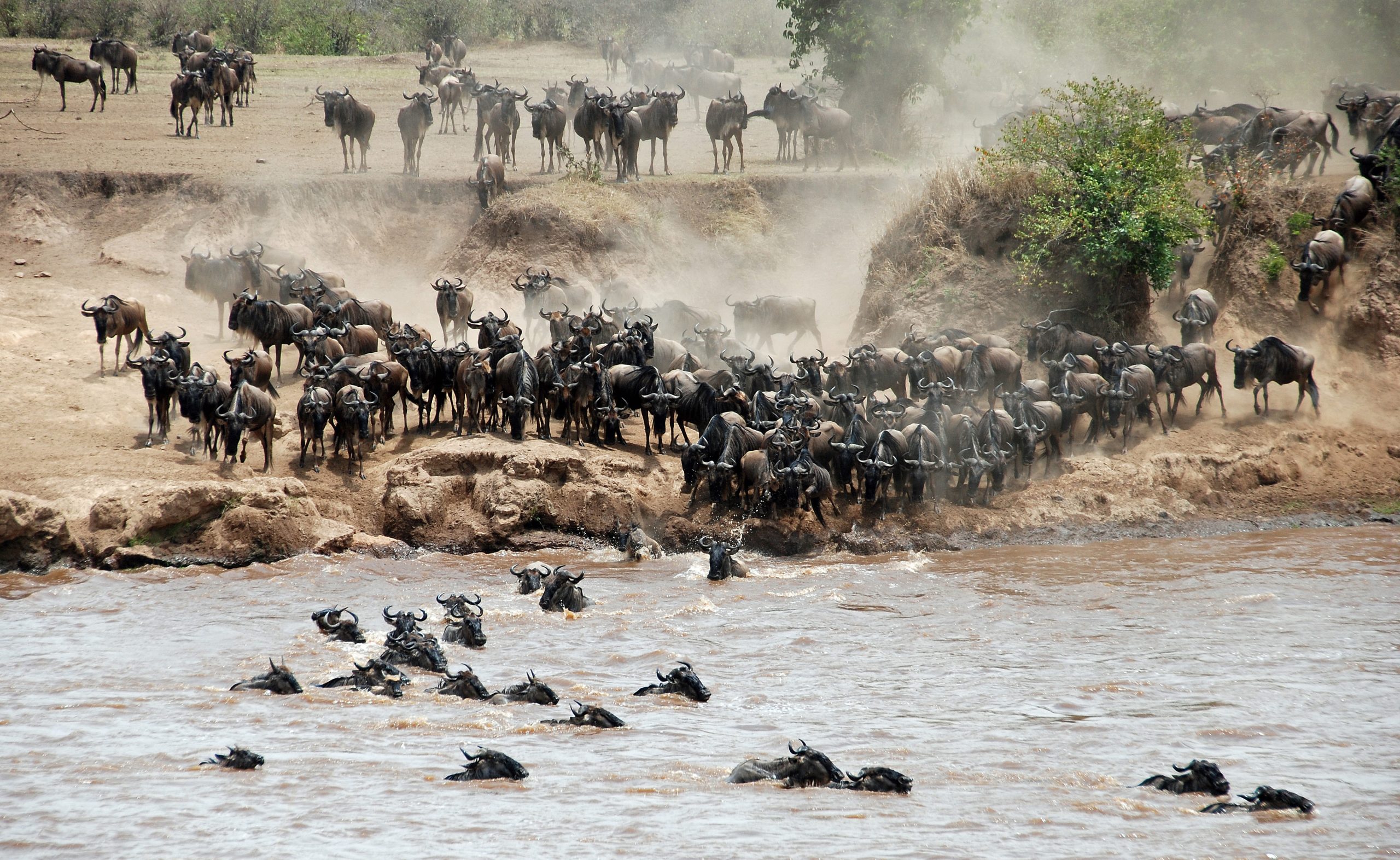
Mara River crocodile population census (2022): The Mara River system in Kenya and Tanzania supports an estimated 2,700 Nile crocodiles. Individual crocodiles in the main Mara crossing zones have been identified by snout scale patterns and photographed over multiple decades. The largest recorded Mara crocodile, estimated from riverbank observations, measured approximately 5.5 metres and is estimated to be over 60 years old.
Hunting Strategy at River Crossings
Crocodiles in the Mara River during a wildebeest crossing do not coordinate their attacks; each individual hunts independently. The typical strategy is to position in the fast water immediately below a crossing point, where wildebeest lose their footing. The crocodile lunges from below the surface, seizes prey in its jaws and uses a ‘death roll’ to disorient and drown it. Prey is held underwater for 30–60 minutes before consumption begins. Large prey items may be cached at the riverbed and returned to over several days. During a major crossing event, crocodile competition for prey can be intense and feeding crocodiles will attempt to steal from each other.
“A river crossing observation is one of the most visceral wildlife experiences available in East Africa. The sheer chaos — thousands of wildebeest entering the water, crocodiles exploding to the surface, the cloud of dust and the roar of hooves — is overwhelming the first time. What strikes me, even after hundreds of crossings, is how brief each crocodile strike is: one second from launch to capture, after hours of motionless waiting.”
Nikos Pocock — Managing Director, Africa Calling Safaris
Crocodile Ecology Beyond the Crossings
The Mara River crocodile population feeds year-round on catfish, barbel, and any other prey available at the water’s edge — the migration crossings represent a seasonal bonanza rather than the only food source. Crocodiles nest on sandbanks in the dry season, with females guarding nests for up to three months. Hatchlings are carried to water by the mother in her jaws and herded in nursery groups for their first weeks. Despite this investment, hatchling survival is low: monitor lizards, marabou storks and other predators take a heavy toll on eggs and young crocodiles.
Frequently Asked Questions
Can the Mara River be crossed safely by safari vehicles?
Yes. Permanent sand crossing points used by safari vehicles are well away from the main wildebeest crossing zones and are carefully assessed by drivers before use. Vehicle crossings occur daily in the dry season and are standard operations for guides working the Mara.
How long can a crocodile stay submerged?
A resting crocodile can remain submerged for up to two hours. Hunting crocodiles typically surface every 10–30 minutes. The ability to slow heart rate to approximately 2–3 beats per minute during submersion is central to their ambush hunting strategy.
Do hippos and crocodiles compete?
Not directly — they exploit different food sources (hippos are grazers, crocodiles are predators) and largely coexist. Hippos will aggressively displace crocodiles from basking sites and will defend calves from crocodile predation. The relationship is one of tolerance with occasional aggression rather than competition.
What is the maximum size of a Nile crocodile?
The largest reliably recorded Nile crocodile measured 6.45 metres and was taken in Tanzania in 1905. Modern crocodiles rarely exceed 5.5 metres due to historical hunting pressure. The oldest crocodiles in the Mara are estimated at 60–70 years of age.
Visited Africa Calling Safaris? We would love to hear your story.
Share Your ExperienceMore from Safari News
All stories-
Events & Conservation
Anti-Poaching Technology in Kenya: From Tracking to AI Prediction
Anti-poaching in East Africa has undergone a technological transformation over the past decade. The tools and techniques that wildlife rangers use to protect elephants, rhinos and other high-value species have shifted from…
-
Travel Tips
Wildlife Photography Tips: Light, Composition and Vehicle Technique
Wildlife photography on safari is a set of skills, habits and attitudes that are acquired through preparation and practice. The best safari photographers are not necessarily those with the most expensive equipment…
-
Travel Tips
African Buffalo: The Herd Animal That Keeps Lions Honest
The African buffalo (Syncerus caffer) is one of the most underappreciated animals on the African savannah. Visitors focused on cats often overlook the buffalo entirely. This is a mistake. The buffalo is…