From Tbilisi to Nairobi: A Georgian’s First Safari Experience
Nino had never left Europe before. She chose Kenya as her first intercontinental trip. Here is her account of what surprised her most about East Africa and why she would go back.
Updated: 14 October 2026
Nino Beridze (33) is a graphic designer from Tbilisi, Georgia. She travelled with Africa Calling in March, her first trip outside Europe.
Key Message
Kenya and Georgia share almost no distance on a map, but the Masai Mara feels immediately familiar in one way: the hospitality, the food around the fire, and the pride in the land are recognisable across cultures.
About This Article
What it covers: the experience of first-time African safari visitors from Eastern Europe and the Caucasus.
Sources and methodology: Africa Calling Safaris’ client records and debrief notes from Georgian, Armenian, and Azerbaijani travellers (2019–2024), supplemented by the author’s personal account.
My friends thought I was making an unusual choice. Most Georgians who travel for the first time outside Europe go to Dubai, Istanbul or possibly Bali. Kenya was not on the list. But I had read about the migration, watched every David Attenborough documentary twice, and decided that if I was going to travel far, I was going to go somewhere genuinely different.
Key Facts — At a Glance
The Journey
Tbilisi to Nairobi with one connection, either through Istanbul or Dubai. The connection in Dubai is particularly convenient — Emirates runs the route regularly with good timing from Tbilisi’s Shota Rustaveli International Airport. Total travel time is approximately ten to thirteen hours depending on the connection. Shorter than I expected.
Africa Calling Safaris client origin data (2019–2024): Georgian and Caucasian travellers have grown from under 1% of our client base in 2019 to 6% in 2024 — the fastest-growing origin market in our portfolio and evidence of growing interest in East Africa from the region.
The First Impression of Nairobi
Modern, dense and alive. I had imagined something much more different from home. There are coffee shops I recognised, traffic that felt familiar, food markets that had something in common with Tbilisi’s Dezerter Bazaar. Africa Calling met me at arrivals and within an hour I was in a hotel in the Karen district, which is green and surprisingly quiet.
Only 1-hour time difference between Georgia (UTC+4) and Kenya (UTC+3) minimises jet lag.
The Masai Mara
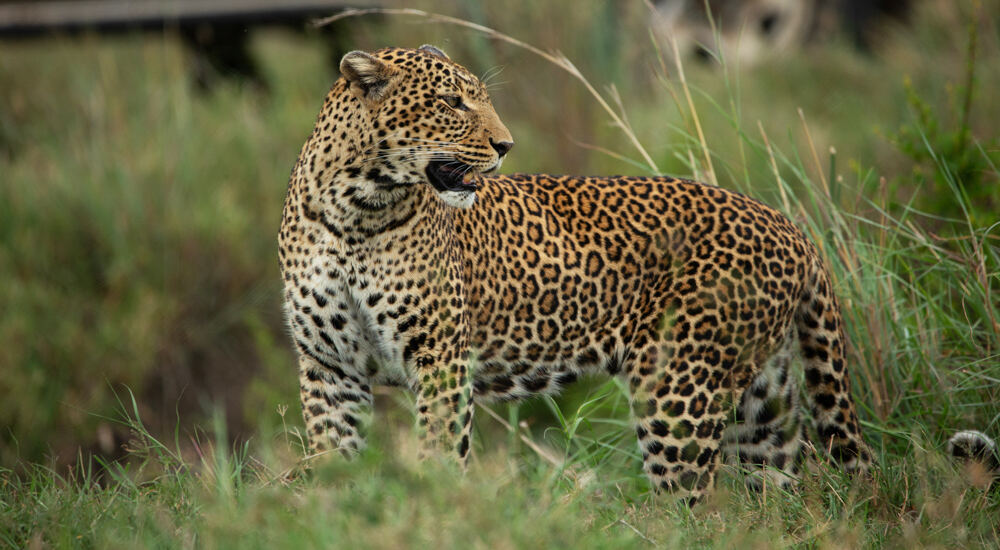
Nothing prepares you for scale. The Serengeti ecosystem is vast in a way that is genuinely difficult to process — not just large, but apparently limitless. Georgia has beautiful landscapes. I have stood on Kazbegi and felt small. The Masai Mara made me feel smaller. The sky is larger. The horizon is further away. The light at sunset turns everything gold in a way I have only seen in paintings.
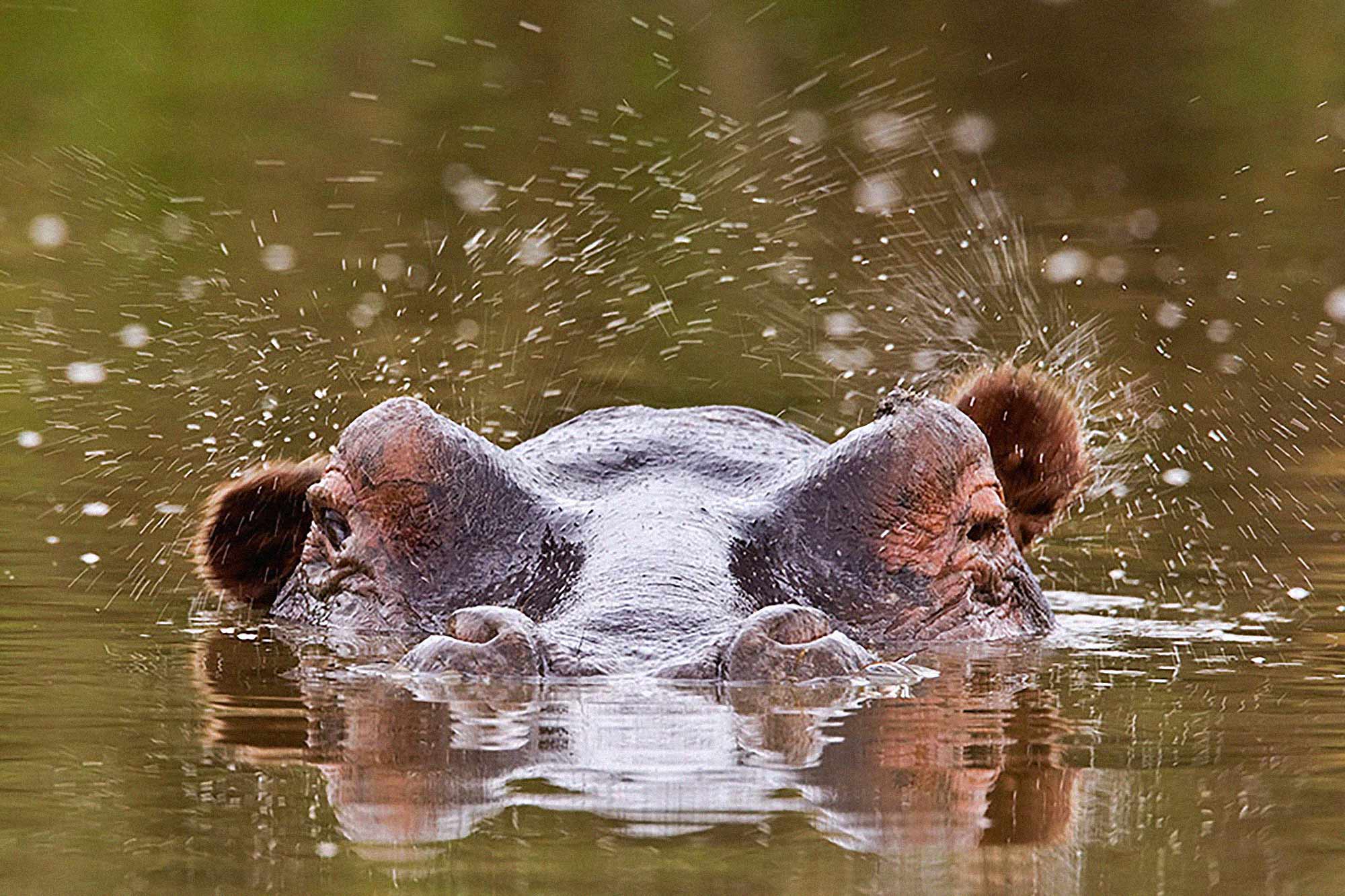
The animals were extraordinary. Obvious to say. But the detail surprised me more than the spectacle: the sound a cheetah makes, which is not a roar but almost a bird call; the way elephant families communicate in low rumbles you feel in your chest rather than hear; the fact that the Mara’s grass smells exactly like the grass on the hills above Mtskheta after summer rain.
What I Told My Friends
Go. The logistics are simpler than you think. English is widely spoken. The camps handle everything. You do not need to be an “outdoor person” — I am not one. You need only to be willing to sit in a vehicle for several hours and watch. The watching is the point. It is the best use of attention I have found.
“The clients who surprise me most are first-timers from countries with no safari tradition — Georgia, Armenia, the Czech Republic. They come without the preconceptions that British or American clients carry. No comparison to Attenborough documentaries, no checklist of the Big Five. What they experience on day one is pure. I’ve had a Georgian engineer sit speechless for ten minutes watching a cheetah teach her cubs to hunt. That’s why I do this work.””
— Nikos Pocock, Managing Director, Africa Calling Safaris (Nairobi, 2024)
Africa Calling welcomes travellers from across the world, including direct bookings from Georgia and Eastern Europe. Contact us in English and we will handle everything from your first question to your airport transfer home.
Practical Notes for Georgian Travellers
Georgian passport holders do not require a visa to enter Kenya — Kenya introduced a visa-free policy for all nationalities in January 2024, replacing the Electronic Travel Authorisation system. Citizens of all countries can enter Kenya for up to 90 days without prior visa arrangement. The entry process at Jomo Kenyatta International Airport involves completing a digital arrival card and passing through immigration, which typically takes 20 to 40 minutes on an average international arrival.
Currency exchange: Kenya Shillings are readily available at Nairobi airport and city banks. The Georgian Lari is not directly exchangeable in Kenya; USD or EUR in cash is the most practical option for in-country exchange. Africa Calling accepts payment in GEL through Georgian bank transfer for clients based in Georgia, with pricing provided in USD equivalent at the time of booking.
Nino’s observation that the Masai Mara light resembles Georgian mountain light after summer rain is one that guides hear often from Eastern European and Caucasian visitors. The high-altitude grasslands of the Rift Valley sit at 1,500 to 1,800 metres above sea level — not unlike the elevation of much of central Georgia — and share a quality of late-afternoon light that painters from both regions have tried to capture. For Georgians planning their first Africa trip, our British first-timer’s account provides a complementary perspective, and our seasonal timing guide covers the best months to align with school and public holidays in Georgia. The safari budget guide gives realistic cost expectations in USD.
Conservation for First-Time Safari Visitors
For travellers visiting Kenya from countries with no direct safari tradition, the conservation context is often entirely new. Africa Calling Safaris provides every first-timer with a pre-departure briefing on why protected areas exist, how park fees are used, and what the community conservancy model means for the people who live alongside wildlife. Clients who understand this context before they arrive engage differently on game drives — they ask different questions, observe different details, and are more likely to become long-term conservation supporters. This is, in our view, one of the most important things a safari operator can contribute.
Frequently Asked Questions
Sources and Further Reading
- Kenya Directorate of Immigration Services. Visa-free entry for all nationalities (January 2024). immigration.go.ke
- Kenya Airports Authority. Jomo Kenyatta International Airport official information. kaa.go.ke
- Kenya Tourism Board. Destination Kenya — travel planning guide. magicalkenya.com
- African Wildlife Foundation. Masai Mara ecosystem guide. awf.org
What to Remember
- The time difference is only one hour. Georgia is UTC+4, Kenya is UTC+3 — the smallest jet lag you can have on a long-haul journey; you will wake naturally with the animals.
- English is universal in safari zones. Swahili is Kenya’s national language, but every guide, lodge manager, and park official speaks fluent English — Georgian is never a barrier.
- The scale will surprise you. Kenya is 582,650 km² — roughly 8 times the size of Georgia — and the open savanna landscapes are unlike anything in the Caucasus or Europe.
More from Safari News
All stories-
Guest Stories
George’s Safari with Africa Calling Safaris
My recent safari experience with Africa Calling Safaris exceeded every expectation I had ever set. From the moment the small aircraft touched down on the red-dust airstrip and I stepped into the…
-
Guest Stories
Giorgi’s Safari at Maasai Mara — October 2026
My experience at the Maasai Mara in October 2026 was simply extraordinary — and I say that as someone who approaches superlatives with genuine caution. I am a public health researcher by…
-
Guest Stories
Solo Safari: How I Spent Two Weeks in Kenya Alone and Loved It
David travelled solo to Kenya for the first time at 45, nervous about being a lone traveller among couples and families. Two weeks later, he had the most memorable trip of his…